The best vintage photo booth delivers something that modern high-tech setups occasionally miss: warmth, nostalgia, and a tactile, human quality that guests connect with on an emotional level the moment they step inside. There's a reason vintage-styled photo experiences continue to rank among the most requested booth concepts at weddings, milestone celebrations, and brand activations alike.
If you've been drawn to the idea of a vintage photo booth for your event and you want to understand what actually makes one work, what the real history behind the format is, how modern versions compare to the originals, and how to find or build a setup that delivers genuine retro charm rather than a superficial costume, this guide covers everything you need to know from concept to execution.
What Makes a Photo Booth Genuinely Vintage?
The word vintage gets applied loosely in the event industry, and there's a meaningful difference between a photo booth that's genuinely vintage-inspired and one that simply has a sepia filter on the output. Understanding that distinction helps you make smarter decisions about what you're actually booking or building.
A genuinely vintage photo booth experience draws from specific historical reference points, whether that's the coin-operated street booths of the 1920s and 1930s, the glamorous portrait studios of the 1940s and 1950s, the bold pop aesthetic of the 1960s, or the warm, grainy film photography of the 1970s. Each of those eras has a distinct visual language covering not just the look of the photos but the physical presentation of the booth itself, the props that belong within it, and the quality and texture of the finished prints.
What pulls a vintage photo booth experience together is the commitment to that specific visual language across every element. The booth's exterior and interior design, the lighting setup, the film emulation or processing style applied to the images, the print format and paper stock, and the prop selection all need to speak the same era-specific dialect. When they do, the result feels authentic and transportive. When any element breaks from the concept, the vintage illusion collapses quickly.
Modern technology has made it significantly easier to deliver a convincing vintage photo experience without sacrificing the reliability and throughput that events require. Film emulation software, dye-sublimation printers capable of producing textured matte prints, and high-resolution cameras that can replicate the tonal qualities of analog photography combine to make the best vintage photo booth setups available today genuinely impressive compared to what was possible even five years ago.
For a broader look at how technology continues to expand what's possible across different photo booth formats, this guide on the best AI photo booth smart features for modern events shows the other end of the spectrum from vintage aesthetics and helps clarify where each approach performs best.
Things To Know Before Booking a Vintage Photo Booth

Vintage photo booth rentals require a different set of questions than standard modern booth bookings. These are the details experienced event planners get clarity on before committing to any vendor.
-
Clarify what vintage means to the vendor. Some vendors use the word loosely to mean a sepia filter on a standard output. Others offer fully committed period-specific setups with authentic physical design elements, era-appropriate props, and film-emulation processing that genuinely replicates the look of analog photography. Ask to see real event galleries and evaluate whether the vintage quality holds up in the finished photos or just in the promotional images.
-
Understand the print format options. Classic vintage photo booths produced vertical strips of four small frames, and that format remains one of the most requested outputs for vintage-styled setups specifically because it references the original experience so directly. Confirm whether your vendor offers this format and what the paper stock and finish options are, since a glossy print on bright white paper immediately undercuts a vintage aesthetic that a matte or textured paper stock would reinforce.
-
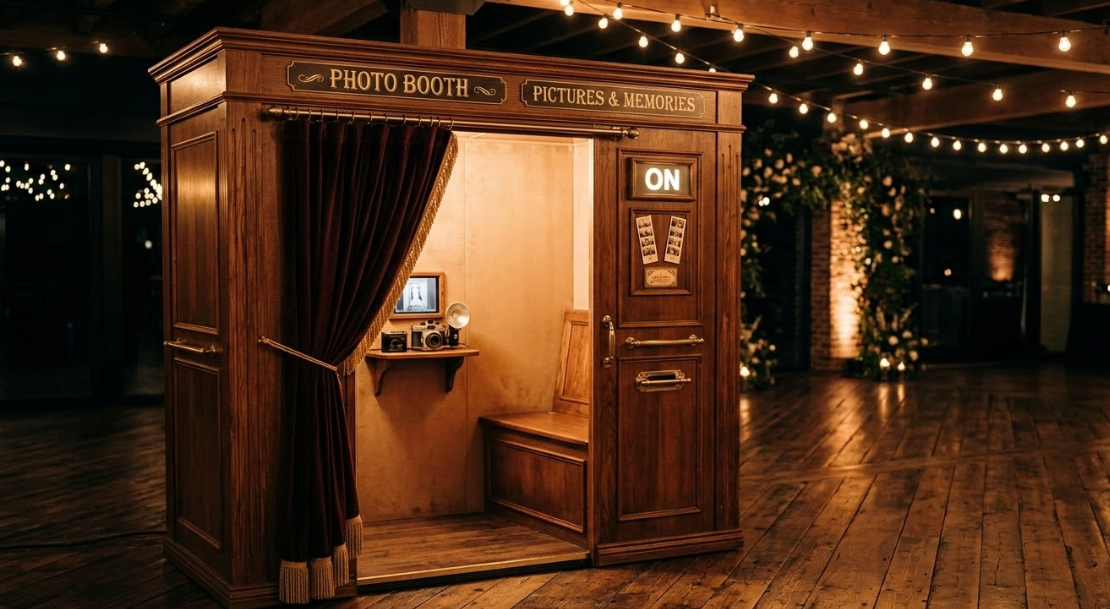
Ask about the enclosure design. An open-air booth with a vintage backdrop is a very different experience from an actual enclosed vintage-style structure with wood paneling, a velvet curtain, and interior period-appropriate lighting. If the enclosed, immersive quality of a vintage booth is part of what you're after, confirm whether the vendor's setup actually delivers that rather than approximating it with a backdrop and some props.
-
Lighting configuration for vintage aesthetics. Warm tungsten-balanced lighting at around 3200K produces the golden, amber-toned quality associated with vintage photography much more authentically than daylight-balanced strobe lighting. Ask your vendor how they configure their lighting specifically for vintage-styled output.
-
Film emulation processing. The specific way digital images are processed to replicate film characteristics, including grain structure, color rendering, tonal curve behavior, and highlight rolloff, varies enormously across vendors. Ask whether they use professional film emulation software or simply apply a basic filter, since the difference in output quality is immediately visible in the finished photos.
-
Props should be period-specific. A vintage 1950s setup with contemporary props immediately breaks the visual spell. Ask your vendor how they source their props and whether they can provide era-specific accessories that genuinely match the time period your theme is drawn from.
A Brief History of the Photo Booth: Where Vintage Actually Comes From
Understanding the real history of the photo booth gives you a richer framework for making themed decisions and helps you communicate your vision more precisely to vendors and event stylists.
The first automated photo booth appeared in New York City in 1925, created by Anatol Josepho. For twenty-five cents, a customer could receive a strip of eight photographs developed automatically within minutes. The machines were an immediate sensation. Within a few years, Josepho had sold the rights for a reported one million dollars, and photo booths began appearing in arcades, department stores, and train stations across the United States and Europe.
Through the 1930s and 1940s, the photo strip became a cultural artifact. People used them for identification documents, as keepsakes for friends and family separated by war, and simply as an affordable way to have a professional-quality portrait made without the expense of a studio photographer. The intimacy of the enclosed booth created a private space where people relaxed in ways they rarely did in front of a studio camera, and the resulting photos have a candid authenticity that makes them genuinely moving to look at decades later.
The 1950s brought a more polished, glamorous quality to booth photography as the machines were updated with better lighting and faster processing. The 1960s introduced color processing into some machines, though black and white remained dominant well into the 1970s. The grain and warmth of the photographs from this era, products of the silver halide chemistry and tungsten lighting used in the machines, are the visual qualities most directly associated with what people today call a vintage photo aesthetic.
By the 1980s and 1990s, digital imaging began displacing analog film in commercial photo booths, and the authentic chemical processing that created the visual character of classic booth photography largely disappeared from mainstream use. What remained was the format, the strip layout, the enclosed booth structure, but the specific look of genuine analog vintage photography became something people increasingly sought to replicate rather than simply produce.
That history is what gives the best vintage photo booth its cultural weight today. Guests aren't just taking a photo with a retro filter. They're connecting, consciously or not, with a format that has documented human joy and intimacy across nearly a century.
Vintage Photo Booth Styles by Era: Which One Fits Your Event?
Different vintage eras produce meaningfully different visual aesthetics, and the era you draw from should align with your event's overall tone and your guest audience's sensibilities. Here's how the most popular vintage periods map to different event types.
| Era | Visual Signature | Best Event Match |
| 1920s and 1930s | High contrast black and white, dramatic shadows, art deco elements | Gatsby-themed events, formal galas, anniversary celebrations |
| 1940s and 1950s | Warm monochrome, glamorous lighting, polished presentation | Weddings, milestone birthdays, classic Americana events |
| 1960s | Early color tones, pop art energy, bold graphic backdrops | Birthday parties, creative brand activations, festival events |
| 1970s | Warm faded color, soft grain, earth tones, natural textures | Bohemian weddings, outdoor events, casual milestone gatherings |
| 1980s | Saturated color, high contrast, neon accents | Retro revival parties, corporate nostalgia events, prom |
The 1940s and 1950s aesthetic is consistently the most requested vintage era for weddings specifically because its combination of glamour, warmth, and romantic polish maps naturally onto the emotional register of a wedding celebration. A setup drawing from this era, with warm tungsten lighting, a soft monochrome or desaturated color processing style, a tufted velvet interior, and props like pearl necklaces, fedora hats, and vintage handbags, produces photos that feel timeless rather than costumey.
The 1970s aesthetic is growing rapidly in popularity for bohemian and outdoor events because its warm, faded color palette and organic textures align perfectly with the broader design trends driving event styling right now. Earth tones, macrame, natural wood elements, and a film processing style that replicates the characteristic warmth and grain of 1970s Kodak film stock create an atmospheric booth that feels both nostalgic and completely current.
For prom events where a vintage theme is part of the evening's concept, the specific era chosen should match the event's overall theme rather than the organizer's personal preferences. A Great Gatsby prom leans into the 1920s aesthetic. A retro sock hop theme draws from the 1950s. Getting that alignment right between the booth and the broader event design is what makes the experience feel cohesive rather than like an interesting booth that doesn't quite fit the rest of the room. Read more about how photo booth rentals create prom memories and why thematic alignment matters so strongly for that audience.
Vintage Photo Booth vs. Modern Photo Booth: How to Decide
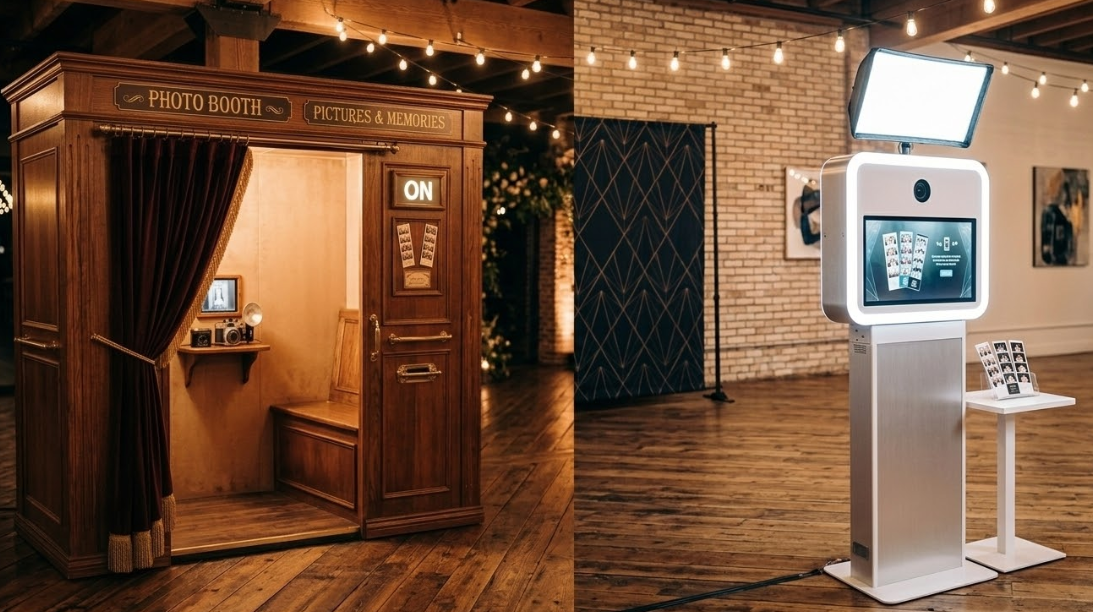
The decision between a vintage setup and a modern format isn't always either-or. Understanding the strengths and trade-offs of each helps you figure out which approach serves your specific event best, or whether combining elements of both gives you the strongest overall experience.
| Feature | Vintage Photo Booth | Modern Photo Booth |
| Visual aesthetic | Warm, nostalgic, era-specific | Clean, current, technologically impressive |
| Guest experience | Intimate, immersive, emotionally resonant | Interactive, high-tech, socially optimized |
| Output format | Film strip, matte print, textured paper | Digital download, branded print, video clip |
| Social sharing appeal | Strong for artistic and lifestyle audiences | Very high across broad demographics |
| Event type fit | Weddings, galas, milestone celebrations | Corporate events, brand activations, trade shows |
| Technology integration | Selective, supports the aesthetic | Central to the experience |
| Throughput per hour | Moderate, sessions feel deliberate | High, optimized for volume |
For weddings and formal celebrations where atmosphere and emotional resonance are the top priorities, a vintage setup almost always outperforms a modern booth on the dimensions that matter most to those guests. The intimacy of an enclosed vintage structure, the warmth of the lighting, and the tactile quality of a matte printed strip create a keepsake that guests value differently from a digital download, and that perceived value is worth something real in how people remember and talk about your event.
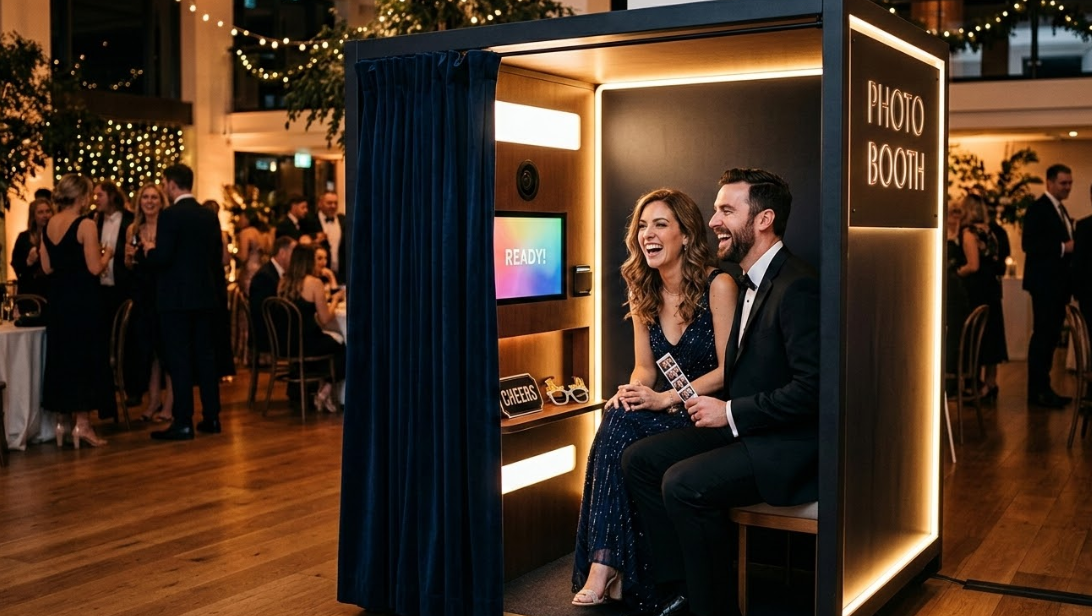
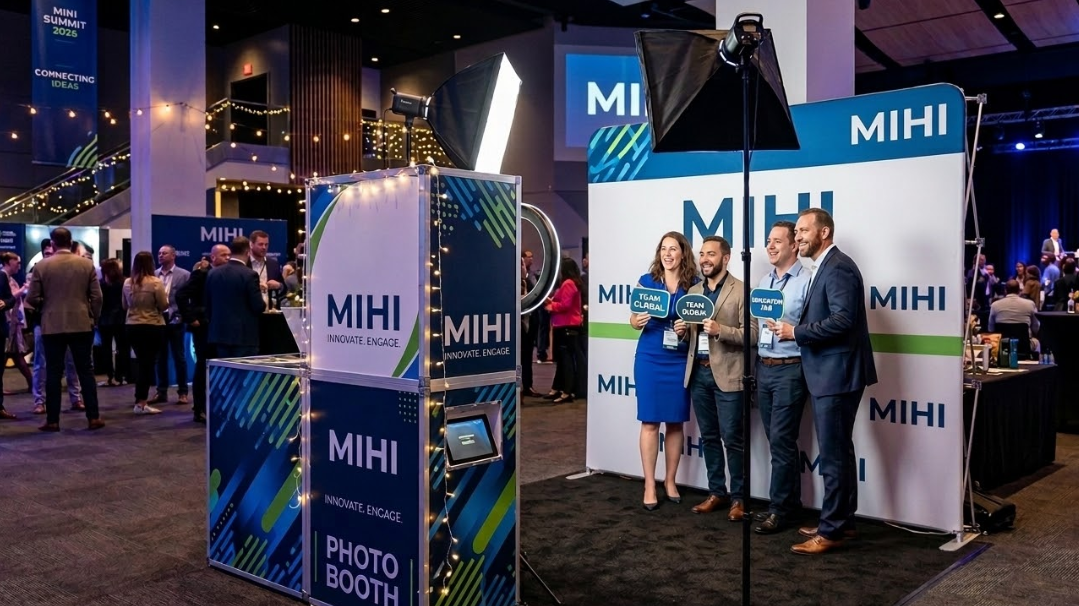
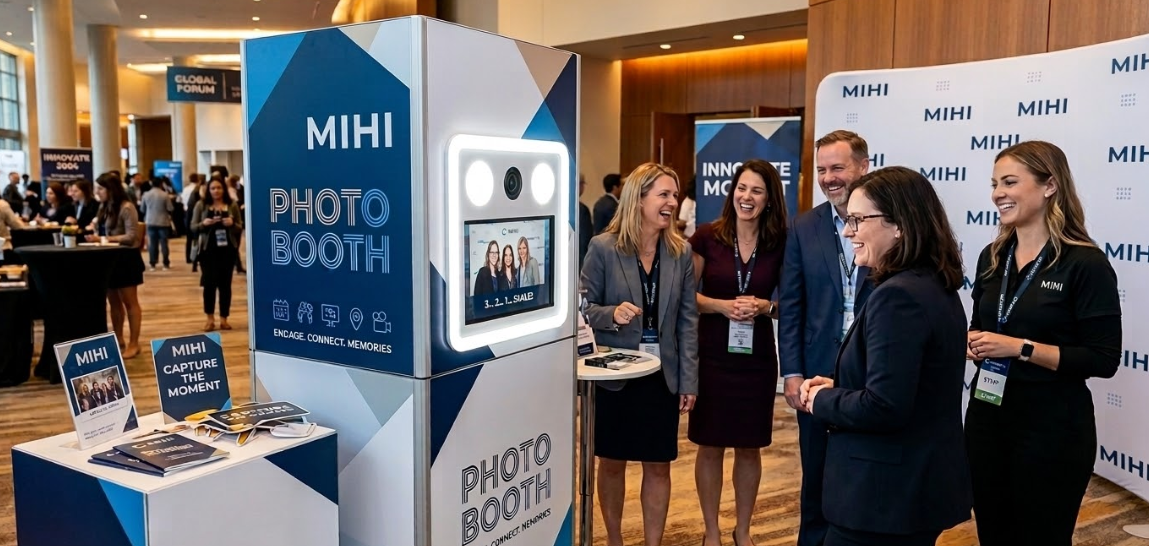
For corporate events and brand activations where data capture, social reach, and technological novelty are the primary goals, a modern format like an AI photo booth or a 360 photo booth typically delivers stronger measurable outcomes. That doesn't mean vintage aesthetics have no place in corporate settings. A 1950s or 1960s themed holiday party booth can be enormously well-received precisely because it offers something different from the modern activations employees have seen at other company events.
For events where combining both approaches makes sense, a glambot photo booth with a vintage-styled video overlay and period-appropriate prop selection bridges the gap between cinematic modern technology and retro aesthetic sensibility in a way that generates both the emotional warmth of vintage and the shareability of contemporary video formats.
Practical Tips for Creating the Best Vintage Photo Booth Experience
Getting a vintage photo booth right involves attention to details that are easy to overlook in the planning process but immediately visible in the finished experience. Here's what consistently separates excellent vintage setups from ones that feel like approximations.
Invest in the props before anything else. The props are the element guests interact with physically, and their quality communicates the seriousness of your commitment to the theme more directly than any other element. Source genuine vintage accessories from estate sales, vintage markets, and antique dealers rather than purchasing reproduction versions from party supply retailers. The difference between a real 1950s cat-eye sunglasses frame and a plastic reproduction is immediately apparent in photos and in the guest's hands.
Consider the scent and tactile environment around the booth. This sounds like an unusual detail for a photo experience, but the most immersive vintage setups create an atmosphere that engages multiple senses. Warm amber lighting, the texture of velvet seating, the smell of aged wood, and the sound of era-appropriate music playing near the booth all contribute to a sense of genuine temporal transportation that purely visual design cannot achieve alone.
Choose your film emulation style deliberately and apply it consistently. The specific visual characteristics of different film stocks, including Kodak Portra's warm skin tones, Ilford HP5's high-contrast black and white rendering, and Fuji Velvia's saturated color palette, each create a different emotional register in the finished photos. Decide which film aesthetic best matches your event's tone and apply it as a consistent processing style rather than mixing approaches across different sessions.
For a broader exploration of how creative photo booth concepts translate into genuinely memorable event experiences, the post on photo booth theme ideas covers the full landscape of themed setup concepts and execution strategies that work alongside and beyond the vintage format.
How Much Does a Vintage Photo Booth Rental Cost?
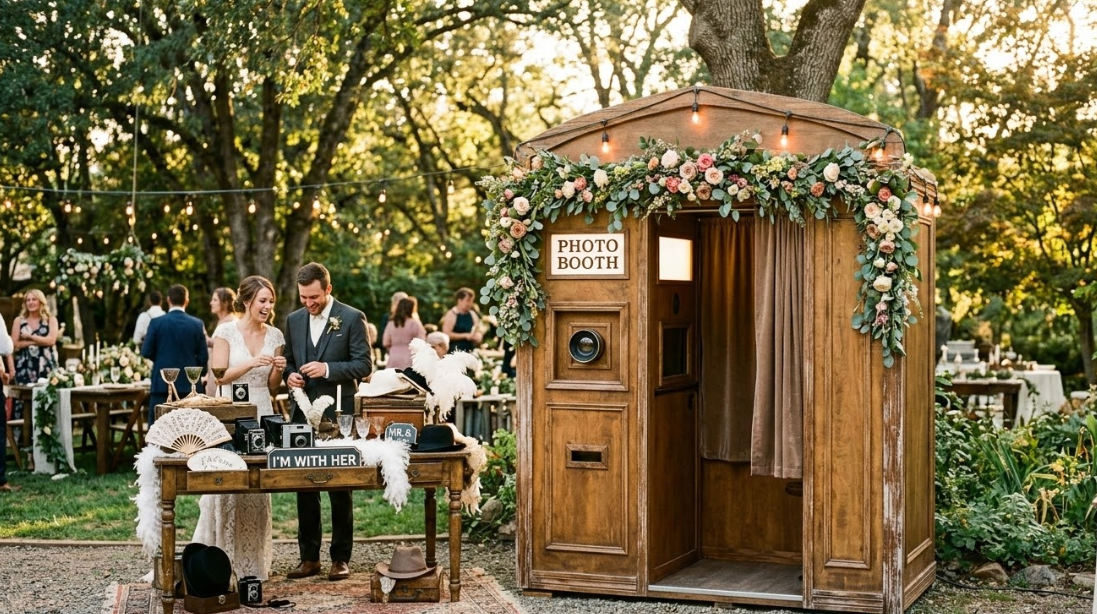
Vintage photo booth rental pricing varies based on whether you're renting a genuinely vintage or vintage-styled enclosed structure versus an open-air setup with a vintage-themed backdrop and processing style. The physical booth structure itself is the most significant cost variable.
A vintage-themed open-air setup with a period-appropriate backdrop, film emulation processing, matte print output, and curated props typically runs between $800 and $1,400 for a three- to four-hour rental. A fully enclosed vintage-style booth structure with custom interior design, warm tungsten lighting configuration, velvet seating, period-specific props, and matte strip printing generally falls between $1,200 and $2,000. In premium markets like New York, Los Angeles, and Chicago, expect those ranges to run 15 to 25 percent higher.
Genuine antique photo booth machines, where available for rental, command premium rates that reflect both their rarity and the logistical complexity of transporting and operating them at events. These authentic vintage machines produce a genuinely different output from modern digital approximations, and for clients where that authenticity matters, the premium is usually considered worthwhile.
Custom prop sourcing, period-specific backdrop design, and custom print template work aligned to a specific vintage era are typically quoted as add-ons to base rental rates. Build those into your initial budget conversation rather than discovering them late in the planning process when design work is already underway.
Frequently Asked Questions
What type of photo booth is best?
For events where atmosphere, intimacy, and emotional resonance are the top priorities, a vintage-styled enclosed photo booth consistently delivers the strongest guest experience, while modern formats like 360 or AI booths perform better for events where social sharing and technological novelty are the primary goals.
The best photo booth type is always the one most directly aligned with your event's emotional register and your specific audience's sensibilities. Vintage setups resonate most powerfully at weddings, milestone celebrations, and themed events where the nostalgic quality of the experience is itself a significant part of the value. For events where measurable marketing outcomes matter alongside guest entertainment, a modern format with vintage aesthetic elements applied as a design layer often balances both priorities effectively.
How do vintage photo booths work?
Original vintage photo booths used an automated chemical development process where guests inserted coins, sat in front of a fixed camera, and a strip of photographs was developed using silver halide chemistry and delivered through a slot in the machine within a few minutes.
The enclosed booth created a private, curtained space that encouraged relaxed, candid expressions. Modern vintage-styled booths replicate this experience using digital cameras with film emulation software that processes images to match the tonal characteristics of specific analog film stocks, then print on matte or textured paper stock that approximates the feel of chemically processed prints. The experience is faster, more reliable, and capable of producing a broader range of aesthetic outputs than the original machines while preserving the format's essential intimacy and charm.
Are vintage photobooths still around?
Yes, genuine vintage photo booth machines are still in operation in a small number of locations across the United States and Europe, maintained by collectors and enthusiasts who restore and operate original analog machines using authentic chemical processing.
Several cities including New York, San Francisco, and Chicago have vintage photo booth installations in bars, galleries, and cultural spaces where you can experience authentic analog strip photography. Beyond these fixed installations, a growing number of rental vendors offer restored vintage machines for events, though availability is limited and lead times are longer than standard modern booth rentals. For most events, a high-quality modern vintage-styled setup delivers a comparable aesthetic experience with significantly greater reliability and throughput.
Were photo booths popular in the 70s?
Yes, photo booths were genuinely popular throughout the 1970s, particularly in shopping malls, arcades, amusement parks, and transit stations, where they represented an affordable and accessible way to get a quick personal portrait without visiting a professional studio.
The 1970s machines produced the characteristic warm, slightly faded color photography that has become one of the most referenced aesthetic touchstones in contemporary vintage photo booth design. The color rendering of 1970s Kodak and Fuji film stocks, with their warm skin tones, slightly elevated grain, and distinctive highlight rolloff, has influenced an enormous amount of modern film emulation software and represents one of the most commercially popular vintage aesthetic references in current event photography.
What are old fashioned photographs called?
Old fashioned photographs are referred to by several different names depending on the specific process and era they were produced in, including daguerreotypes for the earliest silver-on-copper images from the 1840s, tintypes for the iron-based portraits popular through the Civil War era, ambrotypes for glass-based positives from the 1850s and 1860s, and albumen prints for the paper photographs that dominated the late 19th century.
In the broader cultural sense, the term analog photography or film photography is used to distinguish chemically processed images from digital capture, while the specific visual characteristics associated with different film stocks and eras, including grain structure, color rendering, and tonal range, are what modern vintage photo booth setups work to replicate through digital film emulation software and period-appropriate processing styles.