 Skip to content
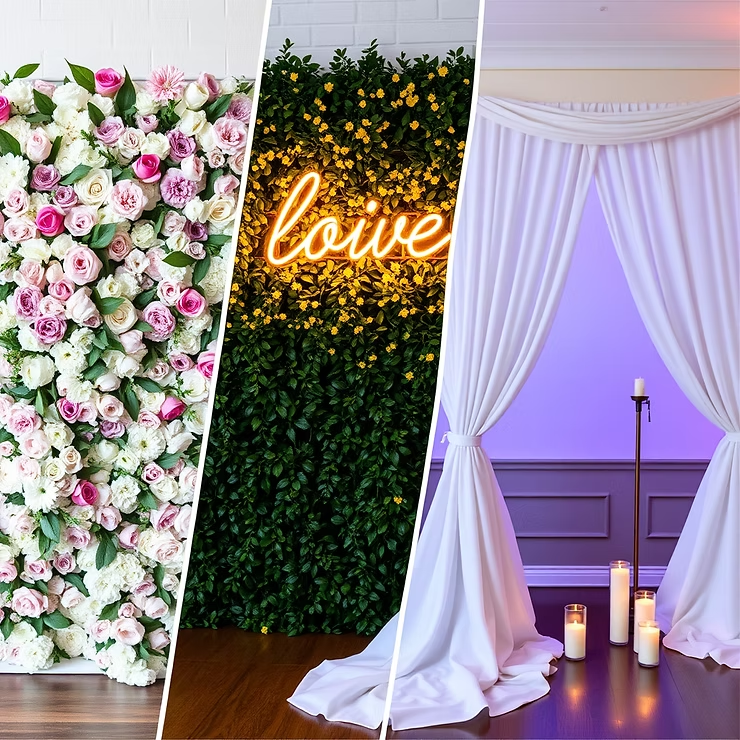
Wedding backdrop ideas that actually look amazing in person and in photos start with your venue, your light, and your budget. The best picks balance style with setup, then pair with the right photo experience.
Think of the backdrop as part of your space plan: echo your venue’s architecture (arches with arches, greenery for gardens), shape the design around your ceremony light (soft, front-facing illumination beats harsh backlight), and choose materials that match your budget without looking cheap (fabric + florals for luxe, foam board + vinyl for budget, rentals for mid-range)
Key Takeaways For Wedding Backdrop Ideas
You will see how to choose a backdrop that fits your space, lighting, and timeline, plus which materials and photo tech to pair for the sharpest keepsakes. We will compare costs, timelines, and maintenance in two quick tables. You will also find practical planning tips, real-world examples, and clear answers to the most asked questions. Internal links point you to helpful inspiration and photo booth options so you can act right away.
Why These Backdrops Work
Backdrops succeed when they solve three things at once: scale, texture, and light. Get the scale right for your room and camera framing, pick textures that read clearly in photos, then aim light to avoid harsh shadows. From there, choose a backdrop that matches your story, like modern neon, timeless florals, or editorial metallics.
If you want turnkey visuals that guests obsess over, pair your pick with an immersive capture experience. A kinetic booth can turn a simple wall into a cinematic moment.
Explore the movement-forward 360 Photo Booth for sweeping shots that elevate even minimalist walls.
Prefer runway drama and sharp edges? The angular set of the Vogue Photo Booth turns clean backdrops into magazine covers.
The Best Wedding Backdrop Ideas By Style 💡
Below are curated concepts with why they work, how to stage them, and which option fits specific venues. You will see where each shines, with tips to avoid common pitfalls.
1) Lush Greenery Wall with Neon Script
2) Asymmetrical Floral Cloud
3) Pleated Fabric + Candleline
4) Minimal Frame with Statement Drape
5) Vintage Doorway or Window Grid
6) Metallic Fringe Wall or Sequin Tiles
7) Tapered Balloon Meadow
8) Printed Fabric Mural or Custom Pattern
💡 Inspiration read: Find moment-driven touches in creating lasting wedding memories with showstopping ideas for add-ons like audio guestbooks and interactive props.
Backdrop Idea vs. Use Case and Booth Pairing
| Backdrop Idea | Best For | Budget Level | Setup Time | Ideal Pairing |
|---|---|---|---|---|
| Greenery wall + neon | Modern city or garden vibes | $$ | Medium | 360 Photo Booth for sweeping movement |
| Asymmetrical floral cloud | Ceremony focal, editorial photos | $$$ | Medium-High | Vogue Photo Booth for high-fashion angles |
| Pleated fabric + candleline | Classic romance, warm skin tones | $$ | Low-Medium | 360 Photo Booth with warm LUT |
| Minimal frame + statement drape | Architectural, clean lines | $$ | Low | Vogue Photo Booth for edge and contrast |
| Vintage doors + greens | Rustic heritage, estate charm | $$ | Medium | 360 Photo Booth to reveal depth |
| Metallic fringe wall | Party energy, after-party | $-$$ | Low | Vogue Photo Booth for punchy highlights |
| Balloon meadow | Brunch weddings, playful sets | $-$$ | Medium | 360 Photo Booth for fun motion |
| Printed mural | Branding cohesion, modern halls | $$ | Low | Either, depending on palette |
🎯 Pro tip: Taller than 8 feet keeps headroom in wide-angle lenses. If your ceiling is low, widen instead of stacking high.
Materials That Photograph Best, And Why
Great photos come from surfaces that hold shape and scatter light predictably. Matte textures reduce hotspots, fine repeats create micro-contrast, and natural elements add visual interest. Combine one dominant texture with one accent so the subject stays the focus.
Matte green walls read clean, hide seams, and accept neon.
Voile, chiffon, or brushed cotton drape gracefully without shine.
Powder-coated metal frames are minimalist and stable in wind-protected spaces.
Shimmer tiles or metallic fringe give sparkle when you want kinetic energy.
Hybrid florals allow budget control while keeping premium blooms at the focal point.
Material Comparison With Photo Considerations
| Material | Look in Camera | Light Behavior | Average Cost Range | Maintenance Notes |
|---|---|---|---|---|
| Faux boxwood panels | Crisp micro-texture | Even, low specular | $$ per 8×8 section | Brush seams, lint-roll before use |
| Pleated voile or silk | Soft, romantic | Diffuses light well | $ to $$ per 10 ft | Steam on site, avoid floor drag |
| Powder-coated frame | Minimalist, architectural | Neutral | $ to $$ | Sandbag base, check clamps |
| Shimmer tiles | High sparkle | Reflective, directional | $ to $$ | Align straight, avoid wrinkling |
| Fresh + faux florals | Lush, dimensional | Soft edge diffusion | $$ to $$$ | Hydrate fresh stems, secure foam |
| Printed fabric mural | Branded, graphic | Matte if fabric, less glare | $$ | Request color-calibrated print |

How To Choose The Right Backdrop For Your Venue
Start with your room. Measure the wall width and ceiling height, then note where guests queue. Leave a 6 to 8 foot camera distance when possible. If you have columns or awkward corners, angle the backdrop so lines read purposeful in photos.
Check power and load-in. Neon, accent lights, and some interactive booths need outlets within 25 to 50 feet. Ask about loading docks, elevators, and setup windows to prevent last-minute surprises.
Plan for light. Natural afternoon sun can flare, while winter evenings need more fill. For greenery, aim two soft lights from 30 degrees to create gentle shadows. For shimmer, place a key light to the side and a small hair light to pop edges.
Match booth to vibe. Editorial couples pick dramatic angles and shadow play. Party-first couples pick movement and multi-guest frames.
For cinematic spins with groups, book the 360 Photo Booth.
For runway drama, lines, and contrast, step into the Vogue Photo Booth.
🔗 Related read for event-scale ideas: Ring in the New Year with MiHi’s unforgettable experiences showcases lighting and countdown tricks that adapt well to receptions.
Budget Planning: Where To Spend, Where To Save
Spend on scale and structure. A properly sized backdrop looks intentional and avoids cramped frames. If the budget is tight, keep florals asymmetrical with premium blooms concentrated in one cluster, then fill with greenery or fabric.
Save on duplication. Repurpose ceremony structures for the reception by rotating them toward the dance floor. Swap neon text from “We Do” to a couple monograms to stretch value.
Rent whenever possible. Panels, frames, and shimmer tiles rent cleanly and reduce storage headaches. Commission only the elements that must be custom, like a printed mural or bespoke script sign.
Lighting is a multiplier. Small uplights can make a $600 wall look like $2,000 in photos. Always preview with phone video at night to check hotspots and glare.
Setup, Safety, And Timeline
48 to 36 hours out: Finalize floor plan and confirm power.
Day before: Steam fabrics, label clamps, pre-tie floral foam.
Load-in window: Place structure first, then surfaces, then lighting. Weight bases with sandbags on both sides.
Fire code: Keep walkways clear, anchor candles in hurricanes, and never block exits.
Breakdown: Have totes ready for hardware and softs, assign someone to coil power safely.

Practical Pairings That Always Work
“Greenery + Neon + Motion” Clean boxwood wall with a warm script, two side uplights, and the 360 platform. Guests enter, spin, confetti pops, the neon anchors the frame.
“Fabric + Candleline + Editorial Angles” Pleated drape in a soft neutral, staggered candles for depth, and the Vogue set for magazine-style crops. Works for any season.
“Printed Mural + Color-Matched Props” A custom pattern from invitations scales up behind you. Use coordinating props so every clip looks on-brand.
Real-World Examples You Can Borrow
Small ballroom, 120 guests: An 8 by 10 voile drape with a single floral cloud on the left, candleline below, and a Vogue booth facing slightly off-axis to hide exit signage.
Garden tent, 200 guests: Greenery wall with warm neon, path lights, and 360 booth on a low platform so dresses flow safely.
Industrial loft, 150 guests: Metallic shimmer tiles on a freestanding grid, colored backlight that matches your palette, and tight-framed editorial captures.
Troubleshooting: Common Issues And Fixes
Wrinkles in fabric: Steam vertically, then clip the bottom corners with hidden weights.
Neon too bright: Use dimmers or place neon behind frosted acrylic to soften the glow.
Backlight glare on shimmer: Rotate tiles slightly, then feather the key light.
Wind at outdoor sites: Choose weighted frames and low-profile florals, avoid tall candles, and stake guy lines discreetly.

Final Take: Wedding Backdrop Ideas That Deliver
The right backdrop is not just a wall. It sets scale, shapes light, and guides how guests move through the room. Start with your venue measurements, choose a texture that photographs well, and pair it with lighting and the capture style that matches your story. With these wedding backdrop ideas, you can create a focal point that looks beautiful in person and transforms into editorial keepsakes later. When you keep materials simple and lighting intentional, your guests will talk about your backdrop long after the last song.
Frequently Asked Questions About Wedding Backdrop
What are the trending backdrops?
The most trending backdrops are greenery walls with warm neon, asymmetrical floral clouds, pleated fabric with candles, and shimmer tile walls for the dance segment. These win because they balance style with camera-friendly texture. Greenery and fabric photograph softly, neon anchors the story, and shimmer adds energy at night. When in doubt, match your backdrop to your lighting plan, then pair it with an experience like a 360 spin to keep lines moving and frames dynamic.
What to use instead of a backdrop stand?
What is the best material for a wedding backdrop?
The best material depends on your vibe, but matte greenery and pleated fabric are the most camera-friendly. Matte surfaces prevent harsh glare and keep skin tones smooth, while pleats add vertical rhythm that flatters full-length portraits. If you love sparkle, choose shimmer tiles with side lighting to control reflections. For custom looks, a printed fabric mural keeps colors accurate and consistent across your stationery and dance floor.
Is it cheaper to build or buy a backdrop stand?
It is usually cheaper short-term to rent or buy a basic stand, but building pays off only if you will reuse it several times. Rental frames save storage headaches, come with the right clamps, and include setup advice. Building requires tools, finish work, and proper weighting for safety. For most couples, rent the structure and invest savings into scale, lighting, or a signature element like neon that you can keep after the wedding.