The most creative photo booth poses are the ones that feel natural, match the energy of the event, and give guests a clear direction without making the whole thing feel like a formal photo session. When people know what to do with their bodies, the photos stop looking stiff and start looking like genuinely fun moments worth revisiting.
Most guests approach a photo booth with a combination of excitement and mild uncertainty. They want a great photo but aren't quite sure how to get there. That split-second hesitation before the camera clicks is exactly where a little posing inspiration makes the biggest difference, turning an ordinary snapshot into something people actually want to share.
Why Posing Matters More Than the Camera Setup
A photo booth can have the best lighting rig in the room, a premium camera, and a stunning backdrop, and still produce photos that look flat and lifeless. The reason is almost always posing. When guests stand stiffly in a straight line staring at the lens with identical expressions, no amount of production quality saves the result.
Posing gives photos life. It communicates mood, relationship, personality, and energy in a single frame. Two people leaning into each other tells a completely different story than two people standing a foot apart looking at separate points on the backdrop. Guests who arrive at the booth with even a rough idea of what to try almost always leave with photos they're genuinely happy with.
For event planners and photo booth operators, this means that building posing prompts into the experience, whether through printed suggestion cards near the prop table, digital prompts on the booth screen, or a friendly attendant offering real-time ideas, directly improves the quality of every photo taken at the event.
Solo Pose Ideas That Actually Look Good
Solo photos at a photo booth can be tricky because there's no one else to interact with, which means the guest's own body language carries the entire image. The good news is that a handful of reliable approaches work consistently well for almost everyone regardless of age, style, or comfort level in front of a camera.
The Over-the-Shoulder Look
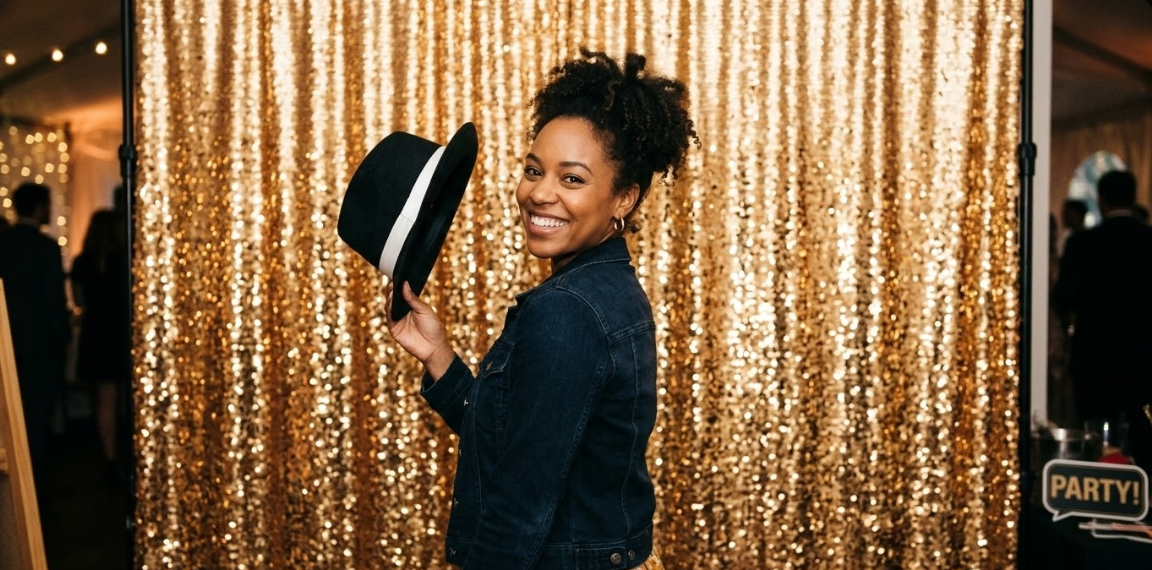
Turning the body at a slight angle to the camera and glancing back over one shoulder creates an effortlessly cool result that photographs well in virtually every booth setup. It introduces natural depth into the image, slims the silhouette automatically, and gives the face a more dynamic angle than a straight-on stare.
This pose works for any event type, from a casual birthday party to a corporate activation, and it pairs particularly well with a prop held casually in one hand. A hat tilted to one side or a speech bubble sign held at waist level adds just enough visual interest without competing with the pose itself.
The Lean and Laugh
Standing slightly angled with one shoulder dropped toward the camera and a genuine laugh mid-capture produces one of the most natural-looking solo booth photos possible. The challenge is getting the laugh to feel real rather than performed, which is where props and a fun prompt card nearby help enormously. Someone reading a silly sign right before the countdown clicks is going to laugh genuinely every single time.
Arms and Hands with Purpose
One of the most common solo booth mistakes is letting arms hang straight at the sides, which reads as stiff and uncertain on camera. Giving arms something deliberate to do, even something small like resting one hand on a hip, tucking a thumb into a pocket, or holding a prop at chest height, immediately improves how relaxed and confident the photo reads.
Group Pose Ideas That Create Memorable Photos
Group photos have their own logic. The goal is to create visual variety across the frame so every person reads clearly and the energy of the group comes through. When everyone does exactly the same thing, the result looks more like a lineup than a moment.
|
Group Size |
Best Pose Approach |
What to Avoid |
|
2 people |
Lean toward each other, height play |
Standing parallel with no interaction |
|
3 people |
Triangle formation, one person in front |
Flat single row with matching expressions |
|
4 to 5 people |
Mix standing and crouching, layered depth |
Everyone same height and same pose |
|
6 or more |
Split into two rows, front row seated or crouching |
Single row where faces are too small |
The Classic Pile-On
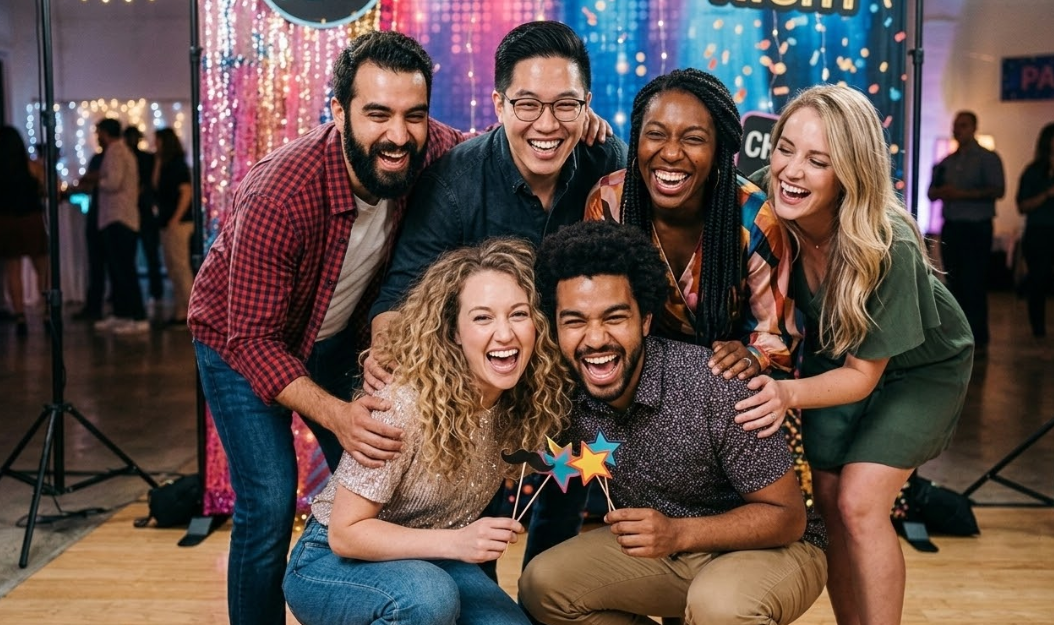
One person sits or crouches at the front of the frame while the rest of the group leans in from behind and either side. It creates an instant sense of closeness, fills the frame naturally, and gives every face a different angle. This works especially well for friend groups, family gatherings, and team events where the existing relationships between people already give the pose warmth.
Jump Shots
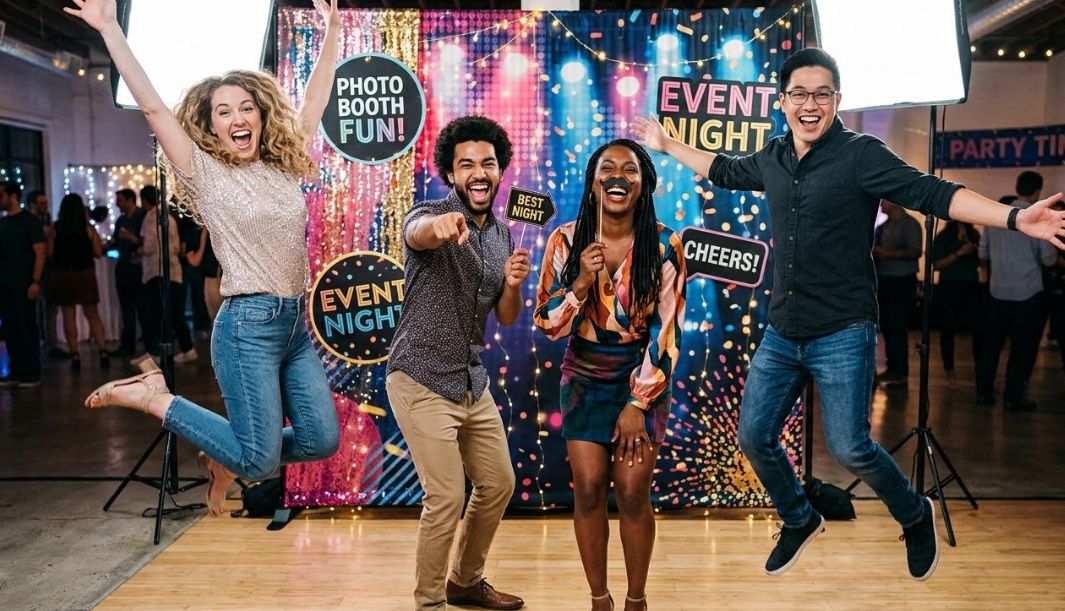
Everyone jumping at the same time produces wildly inconsistent results depending on who left the ground earliest and who bailed at the last second, and that inconsistency is exactly what makes jump shots so entertaining. The best ones aren't perfectly synchronized. They're genuine, chaotic, and full of energy that a posed standing photo simply can't replicate.
For events using a 360 photo booth, jump shots transform into something truly spectacular. The slow-motion video capture freezes mid-air moments in a way that photos alone never achieve, and the final clip becomes some of the most compelling shareable content produced at any event.
The Story Pose
Assign everyone in the group a different emotional reaction to an imaginary scenario and capture the result. One person pointing dramatically at something off-camera, another reacting in surprise, a third looking completely unbothered. It sounds chaotic but it produces photos with genuine narrative energy that guests return to over and over because there's always something new to notice in the frame.
Couple and Partner Poses That Feel Natural
Couples at photo booths tend to default to the side-hug-and-smile combination, which is perfectly fine but rarely produces photos that feel special. A few small adjustments make an enormous difference without requiring any prior posing experience or formal instruction.
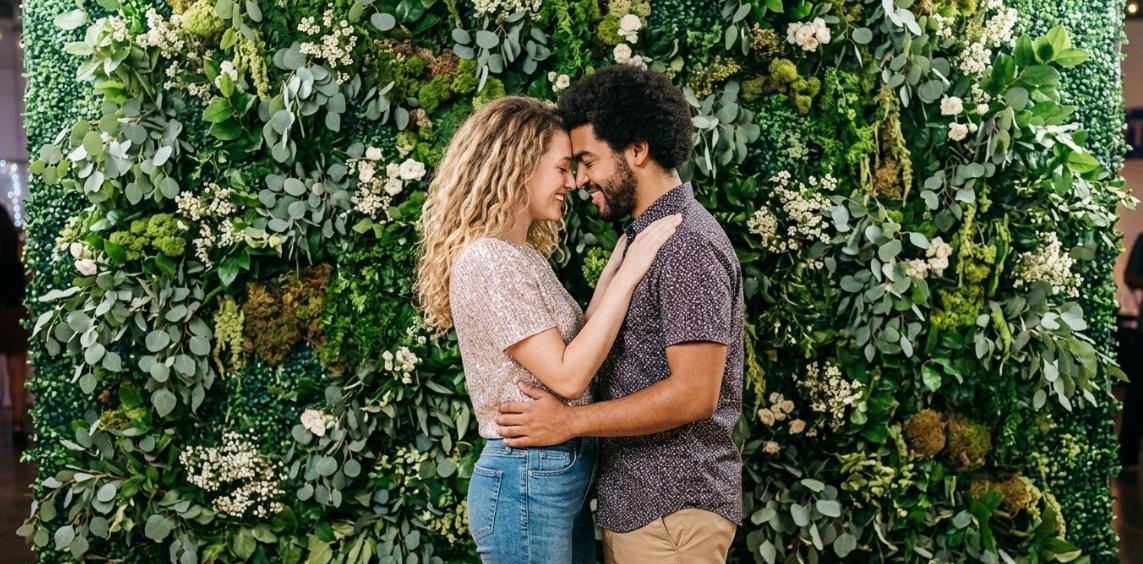
One person facing slightly toward the other rather than both facing straight at the camera creates automatic visual depth and makes the relationship between the two people feel warmer and more connected. Forehead-to-forehead shots work beautifully in photo booths because the close proximity fills the frame naturally and the intimacy reads clearly even from a standard booth camera distance.
For weddings and engagement events, pairing these moments with a glambot photo booth elevates the experience dramatically. The slow cinematic camera sweep turns a simple couple's pose into a red-carpet-worthy clip that looks genuinely produced rather than captured at a party. Couples who try it almost always circle back for a second round.
Props also unlock couple poses that feel playful without requiring much direction. Two people sharing one oversized pair of novelty glasses, or one person holding up a "Yes" sign while the other holds "No," create instant visual humor and a story in a single frame.
Creative Photo Booth Poses Using Props and the Environment
The booth itself can become part of the pose when guests think about the space rather than just standing in front of it. Leaning against a wall element, interacting with the backdrop texture, or using a prop frame as an actual compositional element in the photo all produce results that look more intentional and more interesting than a standard stand-and-smile.
For events where creative photo booth poses are a deliberate part of the entertainment experience, the vogue photo booth setup invites guests into a fully styled fashion-forward environment where the booth's aesthetic directly inspires the posing energy. Guests naturally strike more dynamic, expressive poses when the space around them signals that bold choices are welcome and expected.
Understanding how prop integration shapes the overall booth experience is also covered well in this guide on the best photo booth smart features for modern events, which walks through how physical and digital elements work together in today's top setups.
|
Pose Type |
Works Best With |
Energy Level |
|
Over-the-shoulder solo |
Any backdrop, subtle props |
Low key, cool |
|
Jump shot |
Open floor space, group of 4 or more |
High energy, chaotic fun |
|
Pile-on group |
Close friend or family groups |
Warm, connected |
|
Forehead-to-forehead |
Couples, two friends |
Intimate, sweet |
|
Story reaction pose |
Large groups, corporate teams |
Playful, narrative |
|
Frame prop interaction |
Oversized frame props |
Structured, visually clean |
Building Posing Confidence Into Your Event Setup
The most common reason guests don't experiment with creative photo booth poses is that nobody told them they could. A simple printed card near the booth entrance listing five or six pose ideas removes that hesitation completely. Even guests who consider themselves comfortable in front of a camera appreciate having options to reference rather than improvising from scratch under mild social pressure.
Photo booth attendants who actively offer posing suggestions, rather than just operating the technical side of the setup, consistently generate better photos and longer guest engagement at the booth. A friendly prompt of "want to try a jump shot?" or "have you done the pile-on yet?" is all it takes to unlock a completely different level of participation from guests who would have otherwise played it safe.
For events that incorporate booth entertainment as a central attraction rather than a side feature, exploring how photo experiences are designed to maximize guest participation at dedicated event venues provides useful planning context. This breakdown of event entertainment at Belle Mer Newport Rhode Island venues shows how posing energy and booth placement work together in a real large-scale event environment. For prom and school event planning specifically, this guide on prom memories made easy with photo booth rental covers how to build the kind of booth experience that students actually remember.
Things To Know
-
Posing suggestion cards placed near the prop table rather than inside the booth itself get read more often because guests have time to browse them while waiting in line.
-
Mirror your booth attendant's energy. When an attendant models a fun pose or demonstrates the jump shot, guests follow immediately and rarely need additional prompting.
-
Floor markings like a small tape X showing where to stand help guests automatically position themselves at the correct distance from the camera, which reduces blurry or awkwardly framed photos without any instruction.
-
Encourage guests to try the same pose twice. The first attempt is usually cautious, and the second attempt after seeing the first result is almost always better and more natural.
-
Low-angle camera positions favor crouching and seated front-row poses more than straight-on camera angles. Knowing your booth's camera height before the event helps you tailor posing suggestions to what will actually photograph well.
-
Give large groups a countdown before capture rather than letting them guess when the camera fires. Groups that know the countdown arrive at their pose fully committed rather than mid-transition.
-
Props change posing instinctively. Even guests with no interest in posing advice will naturally adjust their body language the moment they're holding something, which is why keeping the prop table well-stocked throughout the event directly improves photo quality.
FAQs About Creative Photo Booth Poses
What are some fun photo booth poses?
Jump shots, pile-on group formations, and over-the-shoulder solo looks consistently produce the most energetic and shareable results at any event. For groups, assigning everyone a different emotional reaction to an imaginary scenario adds humor and narrative to the frame naturally. For solo guests, giving arms something purposeful to do like holding a prop or resting a hand on a hip immediately shifts the photo from stiff to relaxed.
How can I make my photo booth pics unique?
Use layered posing where different people in the group are doing genuinely different things rather than mirroring each other. Interacting with the backdrop itself, using props in unexpected ways, or incorporating movement like a spin or a dramatic lean creates photos that stand apart from the standard lineup-and-smile result. The goal is a photo that tells a small story rather than simply documenting that people were present at an event.
How do I pose to look good in a photo booth?
Angle your body slightly toward the camera rather than standing completely square on, drop one shoulder slightly forward, and give your arms a deliberate position rather than letting them hang straight down. These three small adjustments work together to make any photo read as more relaxed and natural. A genuine laugh or mid-expression capture almost always looks better than a held smile, so leaning into something funny right before the click helps enormously.
What are the 7 posing points?
The seven posing points are the head, shoulders, elbows, hips, wrists, knees, and feet, each of which contributes to how the overall body reads on camera. When all seven default to a neutral standing position simultaneously, the result looks rigid. Introducing even slight variations in two or three of these points, like a tilted head, a popped hip, or one foot stepped slightly forward, creates a pose that looks natural and intentional without requiring any formal training or coaching.
What is a ninja pose?
A ninja pose is a dramatic action-style stance where the subject lunges forward, raises their arms in a striking position, and adopts an exaggerated expression of intensity or focus. It is consistently one of the most popular requested poses at photo booths because it requires no real explanation, works for all ages, and produces photos with immediate comedic and visual energy. Groups doing coordinated ninja poses together generate some of the most entertaining photo strips from any event.