The best black and white photo booth setups use high contrast lighting, clean backdrops, and thoughtful prop styling to produce images with a timeless elegance that full color photography simply cannot replicate at an event. When every element of the setup is designed around the monochrome output, the results look less like party photos and more like portraits worth framing.
Color photos fade into the visual noise of a social media feed within hours of being posted. A strong black and white image stops the scroll entirely. That difference in visual impact is exactly why monochrome photo booth setups have moved from a niche styling choice to one of the most consistently requested formats across weddings, corporate events, and high-end social celebrations. Guests who step in front of a well-configured black and white setup frequently describe their prints as the best photos ever taken of them, and that reaction tells you everything about what this format is capable of delivering.
What Makes Black and White Photography So Powerful at Events
Black and white photography removes the distraction of color and forces the viewer's eye directly to what matters most in any portrait: expression, light, shadow, and human connection. At events where guests are dressed beautifully, emotionally present, and surrounded by people they care about, those elements are already in abundant supply. A black and white format simply makes them impossible to miss.
The tonal quality of a well-exposed monochrome image also tends to flatter a wider range of guests than color photography does. Skin imperfections that color photography renders visible with uncomfortable accuracy soften significantly in black and white, where the eye reads tonal gradation rather than specific color variation. Guests who normally feel self-conscious in front of a camera frequently discover a new comfort with their own image when they see a well-lit black and white result, which changes how they engage with the booth experience and how enthusiastically they return for additional rounds.
From a design perspective, black and white output integrates beautifully with virtually any event color palette. A venue decorated in deep jewel tones and a venue decorated in soft pastels both produce equally striking black and white booth photos because the output format is independent of the surrounding color environment. That versatility makes the best black and white photo booth a genuinely reliable choice across diverse event types without requiring careful coordination between booth styling and the broader decor scheme.
|
Black and White Photo Booth |
Color Photo Booth |
|
Timeless, elegant output that looks polished in any context |
Vibrant, contemporary output that reflects the event's energy |
|
Flatters a wide range of skin tones and facial features |
Color rendering varies by lighting conditions and skin tone |
|
High visual impact on social media stops scrolling naturally |
Competes with the volume of color content in social feeds |
|
Integrates with any event color palette without coordination |
Benefits from intentional matching with event decor colors |
|
Strong shadow and light contrast creates natural drama |
Depends more heavily on backdrop and prop color choices |
|
Keepsake prints feel gallery-worthy and display-ready |
Keepsake prints feel festive and event-specific |
Lighting: The Single Most Important Factor in Black and White Booth Quality
If color photography is fifty percent lighting and fifty percent everything else, black and white photography is eighty percent lighting. When color is removed from the equation, the entire visual interest of the image shifts onto how light falls across the subject, where the shadows sit, and how much tonal range exists between the darkest and brightest areas of the frame.

High Contrast vs. Soft Lighting for Monochrome
High contrast lighting with a strong key source and minimal fill produces the dramatic, deep-shadow black and white aesthetic associated with classic Hollywood portraits and editorial photography. The shadows are rich and intentional, the highlights are bright and clear, and the tonal range between them creates immediate visual depth that makes subjects look three-dimensional rather than flat. This approach works beautifully for formal events, award ceremonies, and any occasion where the goal is an elevated, sophisticated output.
Softer, more evenly balanced lighting produces a gentler black and white result with a broader tonal midrange and less pronounced shadow areas. This approach flatters a wider range of ages and face shapes and feels more approachable at social events where guests want a beautiful photo rather than a dramatic portrait. For weddings and milestone celebrations where the emotional warmth of the image matters as much as its visual sophistication, softer monochrome lighting often produces the most universally well-received results.
The AI photo booth gives event planners a powerful tool for black and white output because AI-enhanced monochrome processing goes beyond a simple desaturation filter. Machine learning models trained on classic black and white photography apply tonal curves, grain structure, and contrast gradation that replicates the specific qualities of analog film photography in a way that a standard digital filter cannot. The result is a black and white output that reads as genuinely photographic rather than digitally processed, which guests respond to with noticeably more enthusiasm.
Using Light to Create Drama Without Props
One of the most compelling advantages of a well-lit best black and white photo booth setup is that dramatic, interesting images can be produced with minimal prop involvement. A single subject standing in a pool of well-directed light against a dark background with no props whatsoever produces a portrait with more visual impact than a fully styled color setup carrying six different prop elements. That simplicity is a feature rather than a limitation, and it opens the format up to guests who feel self-conscious with props but respond naturally to a lighting environment that makes them look genuinely striking.
Backdrop Selection for Black and White Output
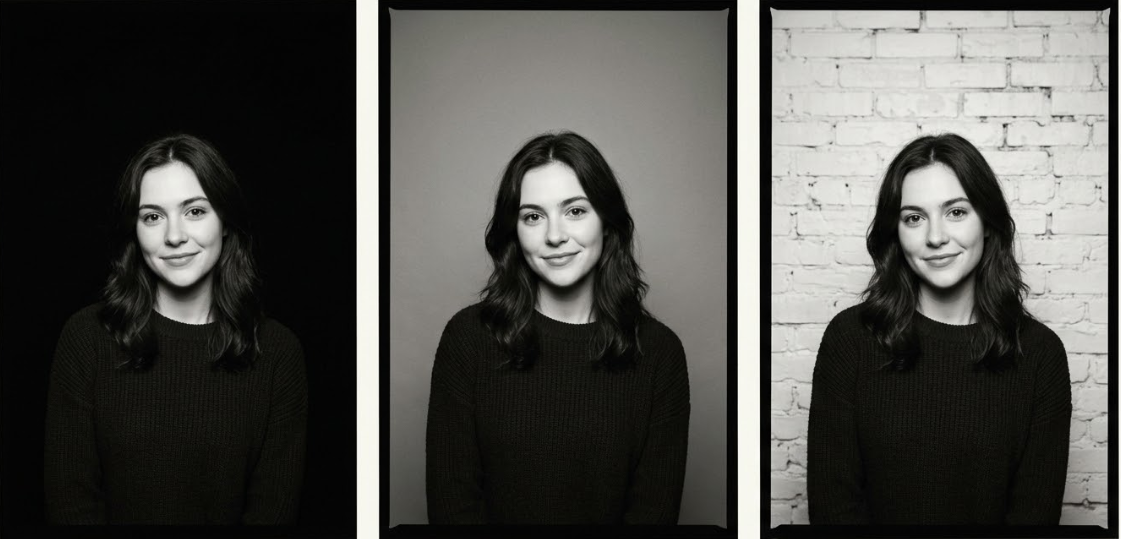
The backdrop choice for a black and white booth has different priorities than it does for a color setup. Since color itself is not part of the output, the relevant factors shift to texture, tone, and how the backdrop interacts with the lighting to create separation between the subject and the background.
Dark Backdrops
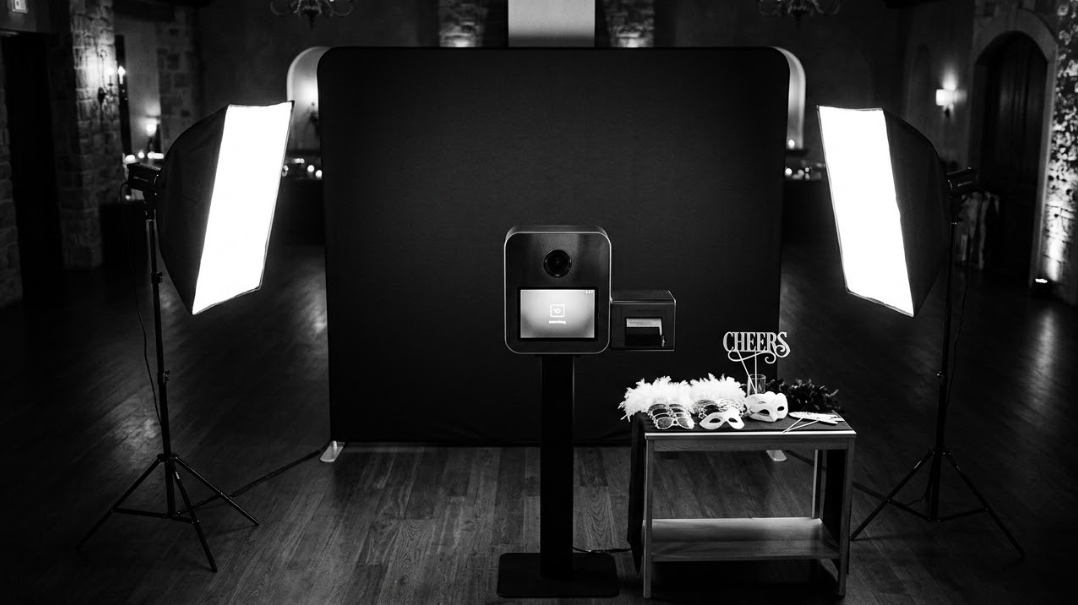
Deep black or very dark gray matte backdrops create maximum subject separation and produce the highest contrast between the background and the lit subject in front of it. This combination is what generates that classic black and white portrait quality where the subject appears to emerge from darkness. For events where a bold, sophisticated visual statement is the goal, a dark backdrop paired with carefully placed key lighting produces images with genuine artistic quality.
The practical consideration with dark backdrops is that they absorb light rather than reflecting it, which means the lighting on the subject needs to be appropriately powerful to create the tonal richness that makes this approach work. Underpowered lighting against a dark backdrop produces murky, low-quality results that the best black and white photo booth experience is specifically designed to avoid.
Mid-Gray and Textured Backdrops
A mid-gray seamless paper backdrop is the workhorse of professional portrait photography for good reason. It provides enough tonal separation from both dark clothing and light clothing to ensure every subject reads clearly against the background, and its neutral tone renders beautifully in black and white without any special processing adjustments.
Textured backdrops, including concrete, linen, exposed brick, and weathered wood, add organic visual interest to the background without introducing color elements that compete with the subject. In black and white output specifically, these textures read with a richness and depth that they sometimes lack in color photography, where the texture can blend with the backdrop's color and become less visible.
Pairing a textured backdrop with a 360 photo booth configured for black and white slow-motion output creates an extraordinarily cinematic result. The slow sweep of the orbital camera around a subject positioned against a textured backdrop in carefully placed monochrome lighting produces clips that look genuinely produced at a professional level. For events where social media content quality is a specific priority, this combination generates some of the most impressive shareable output available from any photo booth format.
Props and Styling for Monochrome Setups
Color-based prop selection logic no longer applies when the output is black and white, which is one of the aspects of this format that most surprises event planners encountering it for the first time. A neon yellow hat and a navy blue hat render identically in black and white output. What matters instead is tonal value, texture, and contrast against the subject and backdrop.
White and silver props read with maximum brightness and visibility against dark subjects and backgrounds. Black props create graphic, high contrast accents that add structural interest to the frame. Props with visible texture, fur, feathers, sequins, and woven materials photograph with particular richness in monochrome because the lighting rakes across their surface and creates tonal variation that flat-colored props lack entirely.
For formal events, minimalist prop selections work better than extensive variety. A single white feather boa, a pair of classic horn-rimmed glasses frames, and a few simple handheld signs produce black and white images with cleaner, more sophisticated composition than a prop basket overflowing with bright-colored novelties that contribute nothing to a monochrome frame.
The glambot photo booth configured for black and white output with a single flowing prop element, a white chiffon scarf, a sequined jacket, or a dramatic cape, produces glamour-reel quality clips where the monochrome slow-motion footage combined with moving fabric creates a genuinely breathtaking result. Guests who see their own glambot clip in black and white for the first time consistently react with immediate, genuine surprise at how cinematic they look.
|
Prop Type |
Effect in Black and White |
Best For |
|
White feather boa |
Bright, airy texture with high visual contrast |
Glamorous and formal events |
|
Classic glasses frames |
Clean graphic accent, adds character |
All event types |
|
Sequined jacket or sash |
Catches light dramatically, creates tonal sparkle |
Evening and award events |
|
Dark bowler or fedora hat |
Strong graphic shape, bold shadow detail |
Vintage and sophisticated themes |
|
Flowing white fabric or scarf |
Dynamic movement with luminous tonal range |
Glambot and motion capture setups |
|
Textured fur stole |
Rich surface detail, luxurious visual weight |
Formal and fashion-forward events |
Event Types Where Black and White Performs Best
Not every event calls for the same photo booth treatment, and the best black and white photo booth setup fits naturally into certain occasions while requiring more deliberate justification in others.
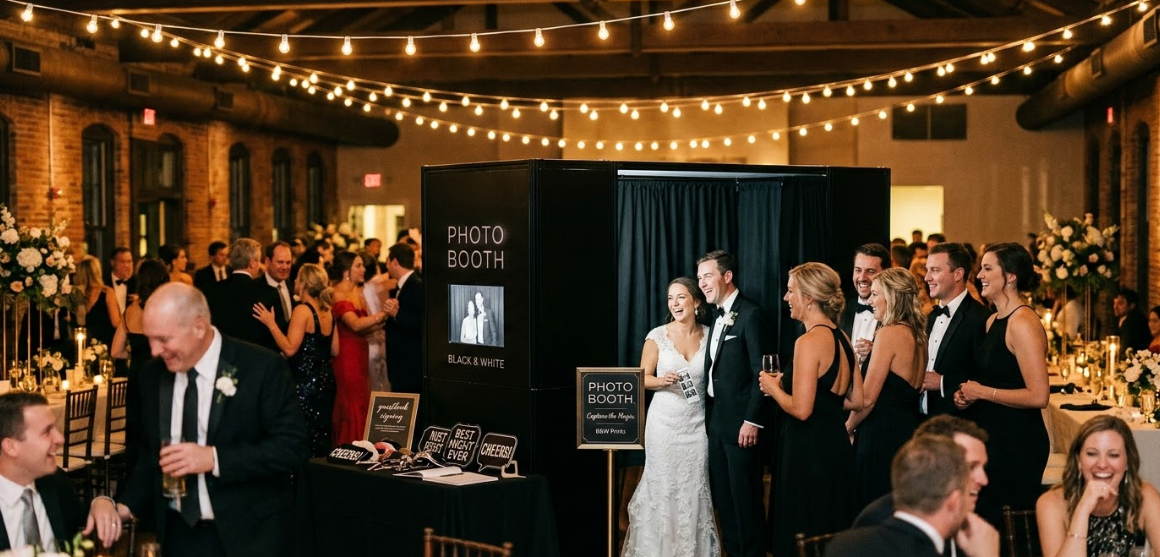
Weddings are the most natural environment for black and white photo booth output. The emotional significance of the day, the formal attire of the guests, and the lasting keepsake value of the prints all align perfectly with the timeless quality that monochrome photography delivers. A black and white wedding photo booth print tucked into a frame on a bedroom dresser looks as appropriate in ten years as it does the morning after the reception.
Corporate events and award ceremonies benefit from black and white output because it elevates the perceived production value of the activation without requiring significant additional investment. Photos that guests receive from a black and white booth at a company gala look genuinely professional rather than like event snapshots, which reflects positively on the organizing company's attention to quality and detail.
For more context on how monochrome and artistic photo booth formats integrate into broader event entertainment strategies, this guide on the best sketchbot draw-me photo booth for modern events explores how artistic output formats create uniquely memorable guest experiences. And for insight into how photo entertainment choices shape the overall event experience at landmark venues, this overview of how activations work at The Wrigley Mansion Phoenix venues provides useful real-world planning perspective.
Things To Know
-
Always test your black and white conversion settings on actual subjects under your venue's specific lighting conditions before the event begins. What renders beautifully in a studio test environment sometimes requires adjustment when ambient venue lighting introduces unforeseen tonal complications.
-
Brief guests that the output is black and white before they step into the booth if it isn't immediately obvious from the booth's exterior styling. Guests who expect color photos and receive black and white are sometimes initially surprised, but guests who know in advance consistently arrive already excited about the format.
-
Wardrobe advice on a small sign near the booth can meaningfully improve output quality. Guests wearing very dark clothing photographed against a dark backdrop need additional fill lighting to create separation. A simple note suggesting that guests with dark jackets consider removing them or adding a lighter accessory improves the tonal range of those photos without requiring any attendant intervention.
-
Grain and film texture overlays applied in processing add authentic analog quality to black and white digital captures. The specific grain structure of classic film stocks like Kodak Tri-X or Ilford HP5 is immediately recognizable and adds a layer of photographic credibility to digital monochrome output that guests respond to positively.
-
Black and white prints show fingerprints and handling marks more readily than color prints do. Providing small glassine envelopes or sleeves for guests to carry their prints protects the output quality and reinforces the premium nature of the experience.
-
The best black and white photo booth results come from shooting in RAW color and converting to monochrome in processing rather than setting the camera to shoot in black and white mode natively. RAW color captures retain full tonal information across all channels, which gives the conversion significantly more depth and control than a camera-native monochrome capture.
-
For multi-format events where a black and white booth operates alongside a color activation, position them in different areas of the venue with clear signage distinguishing the two experiences. Guests who understand they can access both formats visit each one intentionally rather than having to choose between them.
FAQs About the Best Black and White Photo Booth
Is a black or white background better for photobooth?
A mid-gray or dark background generally produces superior results in black and white photo booth output because it creates natural tonal separation between the subject and the backdrop without the extreme contrast challenges of a pure black or pure white surface. Pure white backgrounds can blow out to featureless bright areas under strong lighting while pure black backgrounds require precise lighting control to prevent subjects from disappearing into the darkness behind them. A neutral mid-tone backdrop gives processing the flexibility to go darker or lighter depending on the specific tonal characteristics of each individual subject.
What photos look best in black and white?
Portraits with strong directional lighting, visible emotional expression, high-contrast wardrobe elements, and interesting facial or physical geometry consistently produce the most striking black and white results. At photo booth events specifically, candid laughing moments, dramatic pose profiles, and close-cropped facial expressions all translate exceptionally well into monochrome. Images where color was doing significant compositional work, such as a brightly colored backdrop creating the only visual contrast in the frame, are the format's weakest candidates and are worth rethinking before configuring a black and white setup.
What type of photo booth is best?
For black and white output specifically, an open-air DSLR setup with a dedicated monochrome lighting configuration and a professional RAW-to-black-and-white processing workflow delivers the most consistently impressive results. The control this setup gives over tonal range, contrast, and shadow depth is unmatched by enclosed booths with fixed lighting or consumer-grade hardware. For events prioritizing cinematic output quality over volume capacity, a glambot or 360 platform configured for black and white capture produces results that genuinely elevate the format to a new level.
What are the latest trends in photo booths?
AI-powered artistic style transformation, cinematic slow-motion orbital video capture, and high-concept monochrome activations are among the strongest current trends in event photo entertainment. Within the black and white space specifically, the trend is moving toward setups that more closely replicate the aesthetic qualities of specific classic film stocks rather than simply desaturating digital color images. Grain structure, tonal curve profiles based on analog chemistry, and era-specific contrast characteristics all feature in the most sophisticated contemporary monochrome booth configurations.
How much does an average photo booth cost?
A professionally equipped open-air photo booth rental for a standard three to four hour event typically runs between $600 and $1,200 in most markets, with premium experiential formats including AI-enhanced and glambot setups ranging from $1,500 to $3,000 or more. Black and white specific configurations from experienced vendors sometimes carry a modest premium over standard color setups due to the additional processing sophistication and lighting precision required to produce genuinely high-quality monochrome output rather than simply desaturating a color capture.