Photo booth mistakes to avoid are exactly what separate a seamlessly fun guest experience from one that leaves hosts frustrated, attendants scrambling, and guests walking away with photos they'd rather not keep. The good news is that nearly every common mistake is entirely preventable with the right planning and awareness going in.
Whether you're booking a photo booth for the first time or you've had a less-than-perfect experience at a past event and want to understand what went wrong, this guide covers the most damaging errors made by both hosts and operators, why they happen, and precisely what to do differently to ensure your booth runs beautifully from the first guest to the last print.
Why Photo Booth Mistakes Happen More Often Than You'd Expect
Photo booths look simple from the outside. A camera, a backdrop, some props, and a printer. How complicated could it be? That perception is exactly why so many events end up with a booth that underperforms. The apparent simplicity masks a surprising number of variables that all need to work together correctly for the experience to deliver what guests expect and what hosts paid for.
The mistakes fall into two broad categories. The first is planning mistakes, decisions made before the event that create problems no amount of on-site troubleshooting can fully fix. The second is operational mistakes, things that go wrong during the event itself because of poor preparation, inexperienced attendants, or inadequate contingency planning.
Both categories are preventable, and understanding where the most common failures occur gives you a significant advantage whether you're an event host evaluating vendors or an operator building out a more reliable service. The photo booth mistakes to avoid covered in this guide address both categories systematically so you can approach your next event with genuine confidence rather than hoping things go smoothly.
For a broader look at how the best photo booth services set themselves apart through quality and preparation, check out this guide on the best AI photo booth smart features for modern events to understand what a well-executed premium experience actually looks like from a guest perspective.
Things To Know Before You Even Book a Photo Booth
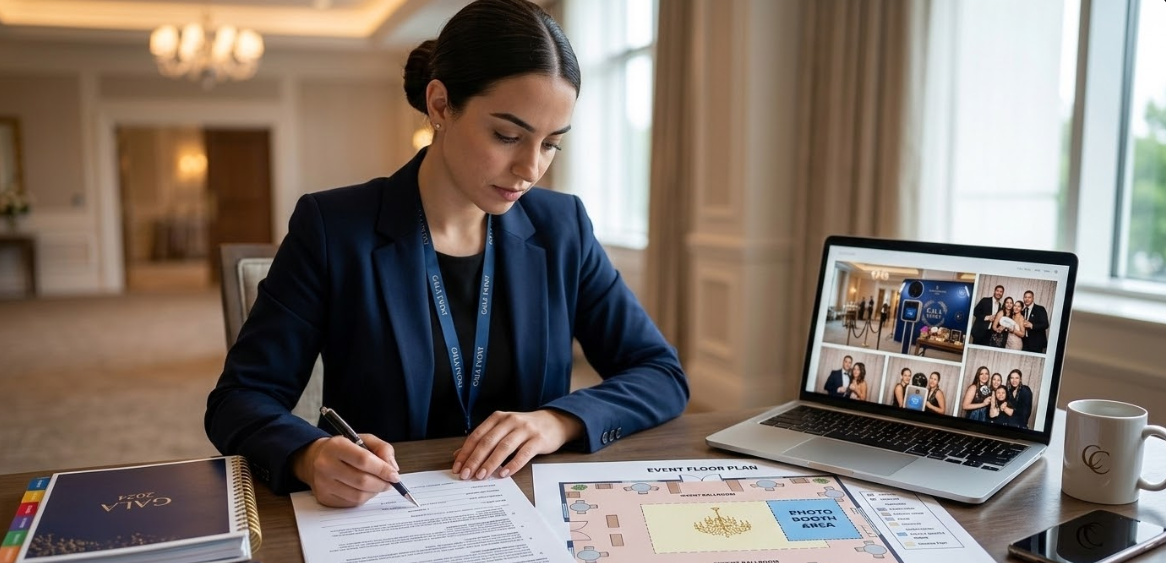
The most expensive mistakes happen before a single guest arrives. These are the planning-stage errors that are hardest to recover from once the event is underway.
-
Booking based on price alone. The cheapest option rarely delivers comparable quality to mid-tier and premium vendors. When vendors cut prices significantly below market rate, something is being cut from the service. It's usually the attendant quality, the equipment reliability, the print quality, or all three. Get itemized quotes from multiple vendors and evaluate what each package actually includes before making any price-based comparisons.
-
Not confirming venue logistics early enough. Photo booths need power access, adequate floor space, appropriate ceiling height for some formats, and often WiFi for digital delivery. Discovering on event day that your booth needs a 20-amp dedicated circuit and the nearest outlet is 40 feet away is an entirely avoidable crisis that a single venue walkthrough would have caught.
-
Overlooking the attendant's experience level. The attendant is the human face of your photo booth experience. An inexperienced or disengaged attendant undermines even the best equipment. Ask vendors specifically about attendant training, whether the person assigned to your event has experience with the specific booth format you're renting, and what their dress code and conduct standards are.
-
Leaving design decisions too late. Custom print templates, branded overlays, exterior wraps, and personalized backdrops all require design time, revision rounds, and production lead time. Vendors who receive design briefs a week before an event are working under constraints that consistently compromise output quality. Start design conversations at least three to four weeks out.
-
Ignoring contract details. Confirm exactly what happens if the vendor cancels, if equipment fails mid-event, or if prints run out before the event ends. A vendor without clear answers to those questions is a vendor without a contingency plan.
-
Not testing the guest experience yourself. If your vendor offers a demo or a test session before the event, take it. Experiencing the booth as a guest, from approaching it to receiving the finished photo, surfaces friction points that no amount of vendor description prepares you for.
The Most Common Photo Booth Mistakes to Avoid at Events
Most of the photo booth mistakes to avoid during the event itself trace back to one of a handful of root causes. Here's a breakdown of the most damaging operational errors and what drives each one.
| Mistake | Root Cause | How to Prevent It | |
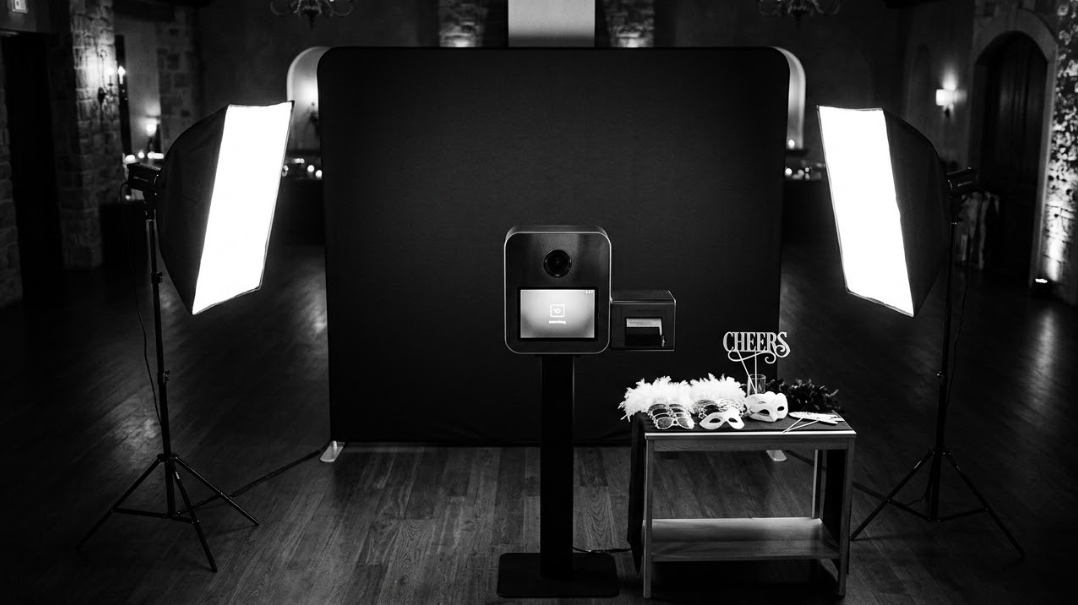
| Poor lighting output | Ambient venue light overwhelming booth setup | Site visit to configure lights before guests arrive | |
| Booth placed in wrong location | No traffic flow analysis before setup day | Walk the venue layout and identify natural congestion points | |
| Long guest queue forming | Single booth for too many guests | Match booth format and capacity to headcount | |
| Props scattered and unusable | No attendant actively managing prop table | Assign attendant responsibility specifically to props | |
| Print quality inconsistency | Printer not warmed up or paper loaded incorrectly | Run test prints before doors open, not during the event | |
| Guests not finding the booth | Poor signage and no emcee mention | Brief your host on booth promotion, add directional signage | |
| Digital delivery failures | Weak venue WiFi, no backup connection | Vendor brings dedicated cellular hotspot as standard | |
| Backdrop looking flat | Insufficient backdrop lighting, wrong distance |
|
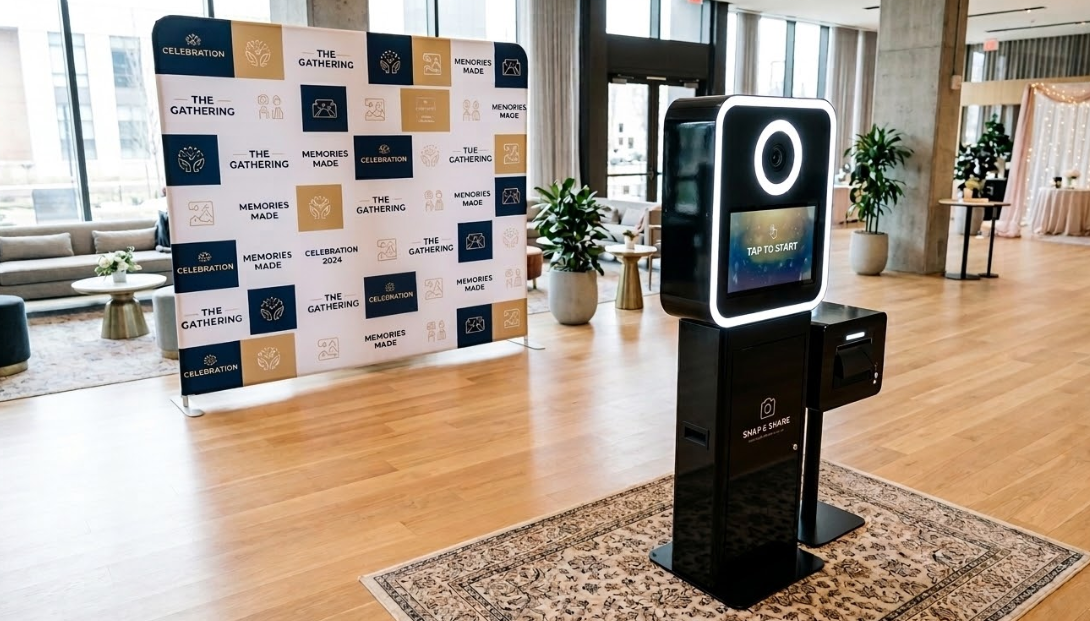
The booth placement mistake is one of the most consequential and least discussed errors in photo booth event planning. Vendors understandably want to set up in the location most convenient for their equipment load-in. That location is often at the edge of the venue, near a service entrance, or in a corner that minimizes foot traffic disruption during setup. Those same qualities make it a poor location for driving guest participation throughout the event. Positioning your booth near the bar, near the entrance to the main event space, or along the primary path guests travel between dinner and dancing consistently produces higher participation rates than a technically accessible but visually hidden corner setup.
For roaming booth formats where placement is less relevant, the equivalent mistake is not briefing the attendant clearly enough on which areas of the venue to prioritize and when. A roaming attendant who spends the cocktail hour in the same corner of the room rather than moving through the full guest circulation pattern misses the majority of the organic moments the format is specifically designed to capture. Read more about how the best roaming photo booth rental handles coverage strategy to understand what a well-briefed roaming operation actually looks like in practice.
Camera and Technical Mistakes That Ruin Photo Quality
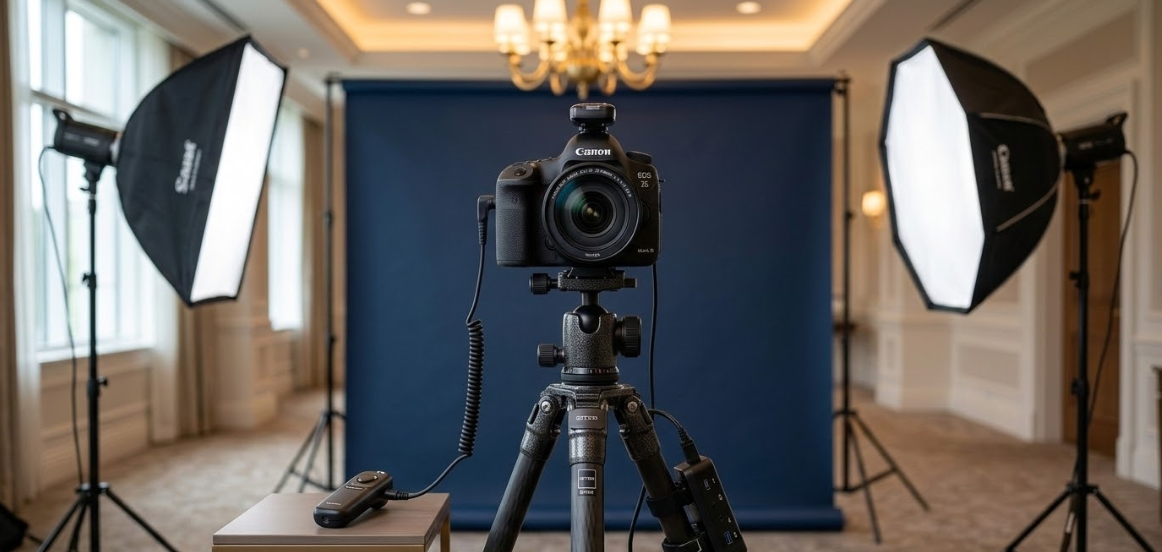
Technical failures are among the most visible and memorable photo booth mistakes to avoid because guests see them immediately in their finished photos. These are the camera and equipment errors that show up most consistently across underperforming booth setups.
Shooting at the wrong focal length is more common than it should be. A lens that's too wide introduces barrel distortion that stretches facial features at the edges of the frame, making guests look unflattering in ways they notice immediately. A lens that's too tight requires guests to stand further from the booth to fit into the frame, which reduces the intimacy of the experience and often creates awkward compositions. For most photo booth applications, a focal length equivalent to 50mm to 85mm on a full-frame sensor produces the most natural, flattering results for individual portraits and small groups.
Autofocus hunting in low-light conditions is a persistent problem for booths operating in dimly lit venues without adequate booth lighting. When the camera can't find sufficient contrast to lock focus reliably, it produces a percentage of images that are slightly or significantly soft, and in a high-throughput booth environment where sessions happen every few minutes, there's no opportunity to reshoot. The solution is configuring the camera to use a fixed manual focus point set to the distance where guests typically stand, then using your booth lighting rather than ambient venue light as the exposure baseline.
Incorrect white balance configuration relative to your lighting setup produces color casts that make skin tones appear orange, green, or gray depending on the mismatch between your camera's white balance setting and your actual light sources. Set your white balance to match your specific lighting color temperature precisely rather than relying on auto white balance, which can shift between sessions as ambient conditions change.
For events where photo quality is a central selling point of the experience, pairing your photo booth with a professional headshots station gives corporate guests two distinct quality tiers within the same event, and the technical setup discipline required for headshot quality directly elevates your booth output as well.
Prop and Backdrop Mistakes That Undermine the Experience
Props and backdrops are the visual elements guests interact with most directly, and mistakes in their selection, maintenance, and presentation are immediately visible in the finished photos. Here's where operators consistently go wrong and how to avoid the same errors.
Overloading the prop table is one of the most counterproductive things a booth operator can do. Forty props piled into a basket creates decision paralysis rather than creative inspiration. Guests stare at the basket, grab whatever is on top, and end up with the same three props appearing in every session all night. A curated selection of ten to fifteen props that are clearly themed, well-maintained, and attractively displayed produces more creative and varied photo outputs than a larger disorganized collection. Less is genuinely more here.
Using worn, broken, or visually tired props communicates a lack of care that guests pick up on even when they can't articulate why the experience feels slightly off. Cracked glasses frames, frayed feather boas, and bent sign props that won't stay upright all undermine the quality perception of the entire setup. Inspect every prop before every event and retire anything that no longer looks its best.
Backdrop wrinkles are one of the most avoidable quality issues in photo booth photography and one of the most consistently present. A fabric backdrop that wasn't properly steamed or hung with sufficient time to relax creates distracting horizontal creases that run across every photo taken in front of it. Steam your backdrop before every event, hang it with adequate lead time, and check it again after transport and setup to catch any new creases that formed during installation.
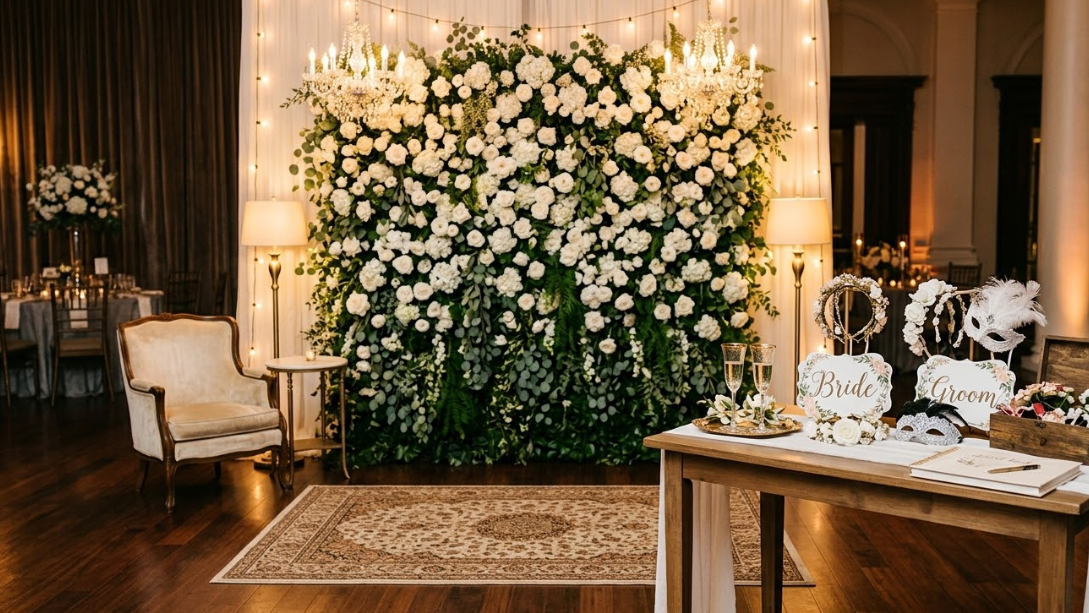
Mismatched prop and backdrop combinations break the visual coherence that makes themed photo booth outputs feel polished. Vintage props in front of a modern geometric backdrop, or bright neon props against a soft romantic floral background, create a visual dissonance that guests sense even if they don't consciously identify it. Every element should speak the same visual language. When selecting props for a specific backdrop, hold them up against the backdrop physically rather than imagining the combination from separate reference images.
For themed events where prop and backdrop alignment is especially critical, the post on photo booth theme ideas covers how to build cohesive themed setups where every element reinforces the same creative concept.
Pose and Guest Experience Mistakes That Produce Weak Photos
Even with perfect lighting, excellent equipment, and a beautiful backdrop, photos consistently fall flat when guests don't know what to do in front of the camera. This is an underappreciated dimension of photo booth quality that attendant training directly addresses.
Guests who stand rigidly upright, face the camera straight-on with arms at their sides, and produce a tight-lipped closed smile produce the category of photo that makes them wince when they see it. The problem isn't the guest. It's that nobody guided them toward a more relaxed and expressive starting position. A good attendant has three or four natural, fun posing prompts ready to offer guests who look uncertain, and delivers them conversationally rather than like a formal direction.
Standing too far from the backdrop is a posing mistake that introduces depth of field issues and creates an unflattering amount of space between the subject and their environment. Guests instinctively want to stand further back than necessary, often because they're uncertain where the frame edges are. Marking the floor with tape at the ideal standing distance removes that uncertainty entirely and produces more consistently well-composed photos without requiring any verbal direction.
Avoiding genuine laughter and expression in favor of a posed smile produces photos that look like passport images rather than event memories. Attendants who engage guests genuinely in the moments before and during the session, asking a quick funny question, making an observation about their props, or creating a simple interactive moment, produce expressions that guests recognize as authentically themselves rather than a performance for the camera.
How Much Should You Tip a Photo Booth Attendant?
This question comes up at nearly every event and deserves a direct answer because the etiquette around it isn't as widely understood as tipping norms in other service contexts.
A photo booth attendant who has done their job well throughout your event, kept the equipment running smoothly, managed the guest queue with patience and good humor, maintained a clean and organized prop table, and produced consistently strong output deserves recognition for that effort. The standard gratuity range for a photo booth attendant is $20 to $50 for a three- to four-hour event, with the higher end appropriate for attendants who went meaningfully above and beyond in their guest engagement and operational reliability.
Some vendors include a service charge or gratuity in their contract pricing. Check your invoice before the event so you know whether an additional tip is appropriate or whether it's already been factored into what you paid. If it's not included and your attendant delivered a genuinely excellent experience, a cash tip at the end of the event is always appreciated and noticed.
Frequently Asked Questions
What are common photo booth camera problems?
The most common photo booth camera problems include autofocus hunting in low-light conditions, incorrect white balance producing color casts on skin tones, lens distortion from inappropriate focal lengths, overexposure from ambient light competing with booth lighting, and shutter lag causing missed expressions during the capture moment.
Most of these problems are preventable through correct pre-event configuration rather than on-the-fly troubleshooting. Setting a fixed manual focus point at the guest standing position, matching white balance precisely to your lighting color temperature, choosing an appropriate focal length for your booth's working distance, and using your strobe power to dominate ambient exposure all address these common issues before they affect a single guest session.
What makes a photo booth unforgettable?
A photo booth becomes unforgettable when excellent lighting that flatters every guest, a visually cohesive themed setup, an engaged and personable attendant, and instantly delivered high-quality output all work together to create a moment that feels genuinely personal rather than transactional.
The technical elements create the foundation. The lighting and camera configuration determine whether the finished photos are worth keeping. The themed design gives the experience a sense of intentionality and context. But the attendant's ability to make guests feel comfortable, guided, and genuinely entertained in the moments before and during their session is what elevates a technically excellent setup into a memory guests talk about afterward.
What poses should I avoid in photos?
The poses most likely to produce unflattering photo booth results include standing rigidly upright with arms pressed against the body, facing the camera completely straight-on with equal weight on both feet, holding props awkwardly at chest level without engaging with them expressively, and producing a forced closed-mouth smile rather than a genuine relaxed expression.
Natural movement and slight asymmetry almost always produce more flattering and expressive results than posed symmetry. Turning slightly to one side, shifting weight onto one hip, leaning in toward other guests in a group shot, and letting props become part of an action rather than just something you're holding all create more dynamic and genuine-looking photos. The best guidance an attendant can offer is to give guests permission to move and play rather than stand still and perform.
How much should I tip a photo booth attendant?
A standard tip for a photo booth attendant who performed well throughout your event is between $20 and $50 for a three- to four-hour rental, with the higher end appropriate for attendants who delivered exceptional guest engagement and operational reliability.
Always check your vendor contract first to confirm whether gratuity is already included in your package pricing. If it isn't, a cash tip handed directly to the attendant at the end of the event is the most straightforward and appreciated way to recognize strong service. For multi-attendant setups at larger events, tipping each attendant individually rather than leaving a single combined amount ensures the recognition is distributed to the people who actually earned it.
What do photo booth attendants do?
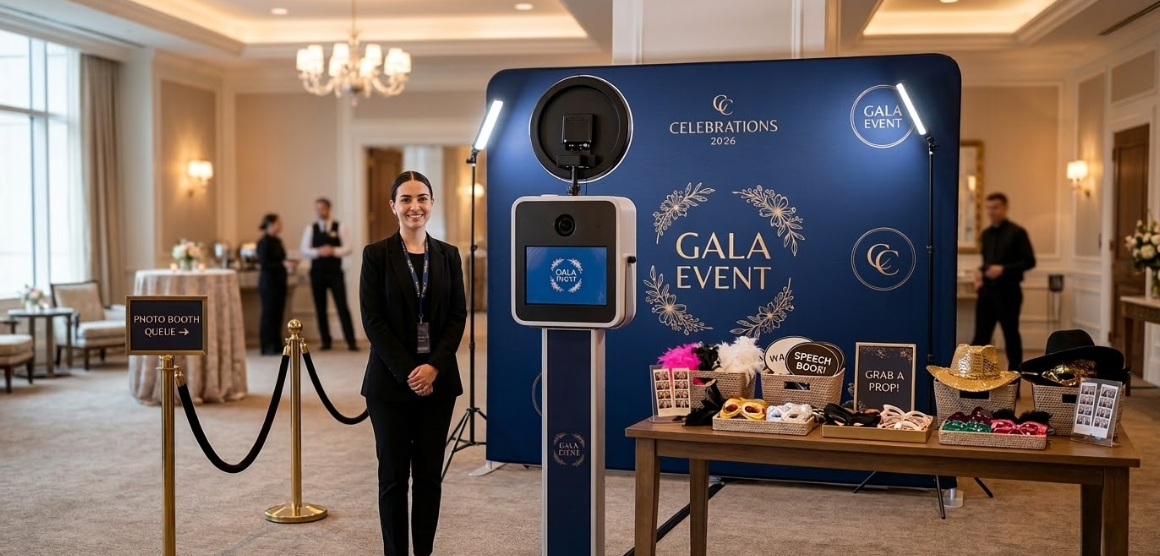
A photo booth attendant manages the complete guest experience at the booth from setup through breakdown, including configuring and testing equipment before the event, greeting and guiding guests through each session, managing the prop table and queue, troubleshooting any technical issues as they arise, replenishing print paper and ink, and ensuring the output quality remains consistent throughout the event.
Beyond the technical responsibilities, the attendant's most important function is creating the interpersonal environment that makes guests feel comfortable and excited to engage. An attendant who is warm, energetic, and skilled at drawing genuine expressions from guests who might otherwise feel awkward in front of a camera directly determines the quality of the photos produced, regardless of how well the equipment itself is configured. The best attendants are the ones guests seek out to thank at the end of the night, which is the clearest possible signal that the experience landed exactly as intended.