 Skip to content
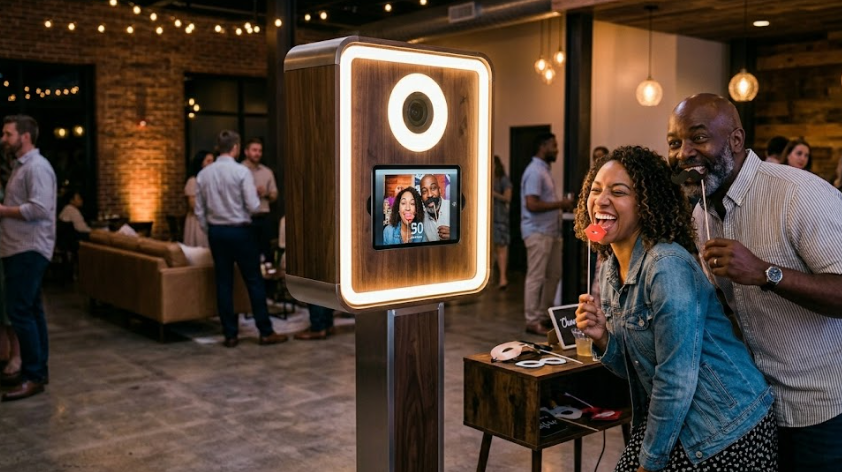
What is the best halo photo booth? A halo booth is the sleek, ring-light-and-tablet style of open air booth, a freestanding kiosk where guests pose into a glowing circular light, capturing photos, GIFs, and boomerangs with instant text delivery. The style was popularized by the Simple Booth HALO hardware, and professional halo-style rentals run 500 to 1,100 dollars for three to four hours, making them one of the most affordable modern booth formats.
The halo format earned its popularity honestly: it is compact, fast, social-first, and that glowing ring flatters faces the way selfie lights always have. But it also has real limits worth understanding before you book one for a milestone event. Let’s break down how halo booths work, what they cost to rent or buy, where they shine, and when stepping up to studio-grade formats pays off.
What a Halo Photo Booth Actually Is
The halo style strips the photo booth to a minimalist column: a tablet camera at the center of a bright LED ring light, mounted on a slim stand, usually paired with a backdrop. The name comes from the circular glow, and the format’s DNA comes from the selfie era, since a ring light is essentially the professionalized version of the lighting people already trust on their phones.
A few traits define the category.
It is tablet-based. Halo-style booths shoot on an iPad or similar tablet rather than a dedicated camera. That choice powers the format’s strengths, instant on-screen previews, touchscreen interaction, GIF and boomerang capture, and seamless text delivery, while also setting its ceiling, because tablet sensors cannot match dedicated cameras in image quality.
It is genuinely compact. The footprint is a slim stand plus backdrop, fitting spaces no traditional setup can: restaurant corners, office lobbies, retail floors, and tight venue layouts. Setup takes minutes rather than an hour.
It is social-first by design. The format was built around digital delivery, with photos, GIFs, and boomerangs texted to guests seconds after capture, live galleries, and branded overlays standard. Many halo rentals skip printing entirely, which suits some events and disappoints others.
It runs lean. Some operators offer halo booths as attended rentals, others as drop-off kiosks the host runs themselves. The drop-off option is the cheapest professional booth experience on the market, and also the one with the least safety net.
In short: the halo booth is the economy-to-midrange workhorse of the modern booth world, ideal for casual and social-driven events, and worth upgrading past when image quality and keepsakes top the priority list.
Halo Booths vs. the Alternatives
Here is how the halo format compares against the other open air styles competing for the same events.
| Format | Lighting | Camera | Typical Rental | Strongest At |
| Halo / Ring Light Booth | LED ring | Tablet | $500 – $1,100 | Casual parties, social content, tight spaces |
| Standard Open Air Booth | Ring or strobe | DSLR | $700 – $1,400 | Weddings, all-ages events, prints |
| Glam Booth | Studio strobes, modifiers | DSLR/mirrorless | $1,200 – $2,500 | Formal events, editorial portraits |
| AI Photo Booth | Varies | DSLR or tablet | $900 – $2,000 | Themed transformations, corporate |
| 360 Video Booth | Continuous LED | High-speed camera | $800 – $1,800 | High-energy video content |
The honest comparison comes down to lighting physics. A ring light is a small, hard source that produces the familiar flat selfie look with the circular eye glint, perfectly pleasant, instantly recognizable, and miles ahead of no lighting at all. Studio strobes with softboxes are enormous, soft, directional sources that sculpt faces and produce the editorial portraits people frame. No tablet filter closes that gap, which is why the vogue photo booth and its studio-glam peers occupy a different tier entirely: same open air concept, magazine-grade results.
The practical guidance falls out naturally. For birthday parties, casual corporate mixers, retail activations, and social-content-driven events, the halo format is the right tool at the right price. For weddings, galas, milestone birthdays, and any event where guests dress up and prints matter, the upgrade to DSLR and real lighting is the single most visible improvement money buys.

What Halo Booths Cost to Rent and to Buy
The halo category spans hobbyist to professional, and the price spread reflects staffing and features more than hardware.
Rental pricing. Drop-off halo kiosks, delivered, set up, and left with the host, run 300 to 600 dollars for an evening. Attended halo rentals with an operator, props, backdrop options, and full delivery features run 500 to 1,100 dollars for three to four hours. Print-capable halo packages, where the kiosk pairs with a photo printer, add 100 to 250 dollars and are worth every cent at multi-generational events.
Purchase pricing. This is where the famous brand name enters the chat. The Simple Booth HALO hardware, the product that defined the category, costs roughly 2,500 to 4,000 dollars for the unit depending on configuration, before the iPad and before the required software subscription, which runs roughly 100 to 300 dollars monthly depending on plan tier. Competing halo-style kiosks from other manufacturers run 1,500 to 3,500 dollars with similar subscription models. All-in, a working halo business setup lands between 4,000 and 7,000 dollars in year one.
That subscription detail trips up most first-time buyers: halo platforms are software businesses, and the texting, galleries, overlays, and analytics that make the format social all live behind the monthly fee. Owners who lapse the subscription own a very pretty light.
The rent-or-buy verdict follows the usual booth math. Hosting one or two events a year, renting wins decisively. Running events monthly, whether as a venue, a marketer, or a side business, ownership breaks even within ten to twenty bookings, and the halo format’s portability makes it the most beginner-friendly booth business on the market.
Getting the Most from a Halo Booth at Your Event
When the halo format fits your event, a few moves multiply its value.
Pair it with a backdrop that does the heavy lifting. Since the ring light handles faces but adds no drama, the backdrop carries the visual interest: balloon garlands, sequin walls, greenery panels, or branded step-and-repeats. The halo’s compact footprint leaves more budget and space for backdrop styling than bulkier formats do.
Lean into the animated formats. GIFs and boomerangs are the halo’s native strengths, since tablets capture and render them effortlessly and they autoplay in feeds. Encourage motion poses, and watch the share rates outrun static photos, a dynamic the Denver GIF booth guide covers in depth for hosts building social-first events.
Confirm the delivery details. Unlimited text sends, a live gallery link, and a branded overlay should all be included; metered sends are a budget-operator tell. If your crowd skews older or the event is keepsake-driven, insist on the printer add-on, because grandparents do not screenshot.
Know when to pair or upgrade. Larger and dressier events often run a halo booth as the volume station alongside a premium experience as the centerpiece. An AI photo booth handling themed transformations or a glambot photo booth delivering cinematic arm footage gives the night its showpiece while the halo kiosk keeps lines short, a pairing that costs less than most hosts expect when bundled.
School events deserve a special mention, since the halo format’s speed and durability make it a prom and graduation staple, and the prom memories photo booth rental guide shows how high-volume student events put the format’s fast cycle times to their best use. For collectible-minded crowds, halo-captured portraits also feed novelty keepsakes beautifully, with concepts like the best custom trading card photo booth turning quick kiosk captures into trading-card treasures.

Where the Halo Format Fits in Your Budget
Here is how halo-style rentals slot into typical event budgets, alongside when to allocate past them.
| Event Type | Booth Budget | Best Halo Strategy |
| Casual party (30-75 guests) | $400 – $800 | Attended halo booth, GIFs on, backdrop styled |
| Office mixer or retail event | $500 – $1,000 | Branded halo kiosk, data capture enabled |
| Wedding (75-200 guests) | $1,000 – $2,200 | Upgrade to DSLR open air or glam, or halo as second station |
| School event (200+ students) | $800 – $1,500 | Halo for volume, printer add-on essential |
| Gala or milestone celebration | $1,500 – $3,000 | Premium centerpiece format, halo optional as overflow |
The pattern is consistent: the halo booth wins wherever volume, space, and social delivery outrank image ceiling, and graciously hands off wherever the photos are destined for frames.
Things To Know
A few insider realities will sharpen your halo decision. First, the word “halo” is used loosely in the rental market, since some vendors mean genuine Simple Booth hardware while others mean any ring-light kiosk, so ask what specific hardware and software the package runs, because the delivery features differ meaningfully between platforms. Second, drop-off rentals carry a hidden cost in host attention, as someone at your party becomes tech support the moment a guest gets confused, and at events past 50 guests the attended upgrade pays for itself in your own freedom. Third, ring lights and glasses have a known feud, with the circular reflection landing squarely in eyewear, so seat the kiosk slightly above eye level and angle it down a touch, a fix good operators apply automatically. Fourth, venue lighting fights small LEDs more than big strobes, meaning dim, moody venues flatter the halo format while bright daylight washes it out, so daytime events should position the booth away from windows. Fifth, the subscription software updates constantly, and rental operators on current plans offer features like AI backgrounds and analytics that older setups lack, making “when did you last update your platform” a surprisingly revealing vendor question. And sixth, the best halo photo booth packages bundle the printer, because the format’s digital-first design makes prints feel optional until the event is over and half the guests ask where theirs is.

Choosing the Best Halo Photo Booth for Your Event
The best halo photo booth is an attended, current-software kiosk with unlimited text delivery, a styled backdrop, and the printer add-on when keepsakes matter, booked for the casual, social, space-tight events where the format genuinely excels. Know its ceiling, pair or upgrade when the occasion dresses up, and the glowing ring delivers exactly what it promises: fast, flattering, share-ready fun.
Mihi Entertainment offers the full spectrum, from sleek social kiosks to studio glam, AI transformations, and cinematic arm experiences, at events across Colorado and nationwide. Match the booth to the moment, and whether your night calls for a halo or a Hollywood rig, your guests leave with proof of a great party.
FAQs About Halo Photo Booths
What photobooth do the Kardashians use?
The Kardashians use the Glambot, a robotic cinematic camera arm capturing ultra-slow-motion glamour clips, the same system seen at the Met Gala and Hollywood parties, not a halo-style booth. The distinction matters when setting expectations: the celebrity glam look comes from high-speed cameras and studio lighting, a different tier from ring-light kiosks. That red-carpet experience is available for private events through professional rental companies, and it pairs well with a halo kiosk handling volume alongside it.
What is the best photo booth to purchase?
For buyers entering the booth business, a halo-style kiosk is the best first purchase, costing 2,500 to 4,000 dollars plus software, while established operators upgrade toward DSLR open air setups at 4,000 to 12,000 dollars for premium clients. The halo format wins on portability, setup speed, and beginner-friendly software, making it the standard entry point. Buyers should budget for the monthly software subscription and an iPad, and confirm the platform includes text delivery and live galleries before committing.
How much does Simple Booth HALO cost?
The Simple Booth HALO hardware costs roughly 2,500 to 4,000 dollars depending on configuration, plus an iPad and a required software subscription running about 100 to 300 dollars per month by plan tier. First-year all-in costs typically land between 4,000 and 7,000 dollars for a working professional setup. The subscription powers the texting, galleries, overlays, and analytics that define the product, which is why budgeting hardware alone understates the real investment.
What is the best mirrorless camera for a photo booth?
The most popular mirrorless cameras for photo booths are the Canon EOS R50 and R100, Sony ZV-E10 and a6400, all pairing strong autofocus and clean image quality with booth software compatibility. Operators prioritize reliable tethering, face-detection autofocus, and flash sync over megapixels, since booth photos live at print and social sizes. Paired with a real strobe and softbox, any of these bodies produces portraits a tablet sensor cannot match, which is the entire argument for upgrading past ring-light kiosks.
What’s a good camera for a photo booth?
A good photo booth camera is any current entry-level DSLR or mirrorless body, Canon, Sony, or Nikon, with reliable tethering support, paired with proper lighting, which matters more than the camera itself. The honest hierarchy runs: lighting first, lens second, body third. A modest camera under a softbox strobe beats an expensive one under a ring light every time. Tablet-based booths trade that image ceiling for interactivity and instant delivery, a perfectly fair trade at casual events and the wrong one at formal ones.