 Skip to content
Key Takeaways
- Starting a photo booth business typically requires $3,000-$10,000 in upfront equipment costs, depending on booth type.
- Most states require a general business license and liability insurance before you can legally book venues.
- An LLC isn’t legally required to start, but it protects personal assets once you’re signing contracts with clients.
- Profitability depends far more on booking frequency and local market saturation than on owning premium equipment.
- The biggest early mistake is buying expensive gear before confirming there’s unmet demand in your area.
Starting a photo booth business means acquiring the right equipment, securing basic legal protections, and building a booking pipeline before you ever plug in a camera at a paid event. The equipment is the easy part. The hard part is proving there’s enough local demand to make the math work.
What Does Starting a Photo Booth Business Actually Involve?
Someone searching this keyword is almost always in the early research phase, weighing whether this is a viable side business or full-time venture before spending real money. This is commercial investigation intent with a strong transactional undercurrent: they want a real cost breakdown, not motivational content about “following your passion.”
Related terms worth understanding alongside this one include photo booth business startup costs, event photo booth equipment, photo booth LLC requirements, photo booth rental profitability, mobile photo booth business, and photo booth business insurance. These show up across every serious vendor forum and small business subreddit discussing this exact venture.
A photo booth business breaks down into four core components: equipment, legal setup, insurance, and a booking pipeline. Skipping any one of these tends to surface as a problem within the first few months, usually in the form of a client asking for proof of insurance you don’t have, or a booth sitting unused because nobody knows you exist yet.
Why the Timing Question Matters More Than People Expect
Photo booths have shifted from novelty to standard fixture at weddings and corporate events over the past several years, which cuts both ways for someone starting a business now. Demand is real and growing, but so is the number of vendors competing for the same bookings in most metro areas.
The markets where new entrants still do well tend to be smaller cities and suburban areas with fewer than five established vendors, not saturated metros where undercutting on price is the only way to book events. Figuring out which category your local market falls into before spending money on equipment is the single highest-leverage research step in this entire process.
Equipment You Actually Need to Start
The equipment list matters less than people think, and the specific gear you choose should follow your target market, not the other way around.
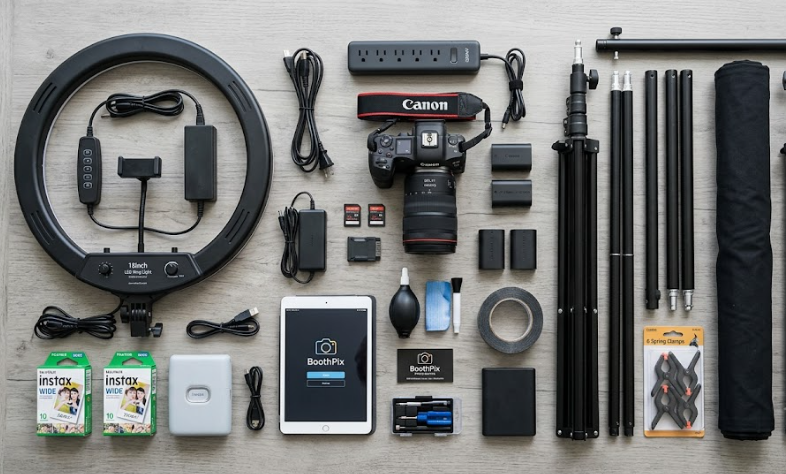
- Camera and lighting rig. A DSLR or mirrorless camera with a ring light or softbox setup produces noticeably better prints than a webcam-based system, and print quality is what gets you repeat referrals.
- Enclosure or backdrop stand. An enclosed booth suits birthday parties and casual events; an open-air stand with a backdrop works better for weddings where guests want group shots.
- Instant printer. Dye-sublimation printers cost more upfront than inkjet but produce prints that don’t fade or smudge, which matters directly for client satisfaction.
- Booking and template software. Most vendors use dedicated booth software for touchscreen interfaces, custom overlays, and instant digital delivery.
- Backup gear. A second printer or camera isn’t optional once you’re taking paid bookings; equipment failure mid-event is the fastest way to lose a client relationship.
A basic enclosed setup runs $2,500-$4,000, while a more advanced open-air or specialty format like a 360 photo booth can run $6,000-$10,000 including software licensing.
Legal Setup: Licenses, LLCs, and Insurance
This is the part most new owners underestimate, and it’s also where a lot of first-year businesses run into avoidable trouble.
Business License
Most cities and counties require a general business license to operate legally, even as a solo operator running events on weekends. Requirements vary significantly by state, so checking with your local county clerk’s office before booking your first paid event avoids fines down the line.
LLC Formation
Forming an LLC isn’t legally required to start booking clients, but it separates your personal assets from business liability once you’re signing contracts. Most photo booth owners form an LLC within their first few months once bookings become consistent, since the cost (typically $50-$500 depending on state) is small relative to the protection it provides.
Liability Insurance
Nearly every reputable venue, hotel ballroom, country club, or event space, requires proof of general liability insurance before allowing a vendor to set up equipment. Policies for a small photo booth business typically run $300-$800 per year, and skipping this step will get you turned away at the door of your first venue booking.

Building Your First Bookings
Equipment and paperwork don’t generate revenue on their own. The businesses that survive their first year are the ones that treat marketing as seriously as the equipment purchase.
- Local vendor networking. Wedding planners, venues, and caterers refer photo booth vendors constantly; building relationships with three or four local planners often generates more bookings than any ad spend.
- A basic portfolio site. Even a simple one-page site with sample photos and pricing tiers builds credibility with couples researching vendors online.
- Directory listings. Getting listed on wedding marketplace sites and researching how competitors position themselves, similar to reviewing event photo booth services in your area, helps you understand standard package structures before setting your own prices.
- A strong social presence. Posting real event photos (with client permission) on Instagram consistently outperforms paid ads for a new local vendor with no track record yet.
Early on, taking a handful of discounted or free bookings for friends’ events builds a portfolio of real photos faster than waiting for full-price clients to find you organically.
Pricing Your Services From Day One
Undercharging is one of the most common early mistakes, since new owners often price based on equipment cost recovery rather than market rate. Most 3-hour rentals in a given market run $400-$900, and pricing significantly below that range signals lower quality to potential clients rather than value.
Research three to five competitors in your specific area before setting your first price sheet. If your market already has several established vendors, differentiating on service quality or a specific niche, like corporate events or a specialty format, works better than competing purely on being the cheapest option.

Common Mistakes New Owners Make
A handful of errors show up repeatedly in first-year photo booth businesses, and most are avoidable with a bit of upfront planning.
- Buying premium equipment before confirming demand. A $10,000 specialty booth doesn’t help if your local market only supports $500 bookings.
- Skipping insurance to save money early. This locks you out of most legitimate venue bookings entirely, not just riskier ones.
- Underpricing to win first clients. This trains your early client base to expect below-market rates, making it hard to raise prices later.
- Ignoring backup equipment. A single point of failure at a paid event, one dead printer, one crashed laptop, can end a client relationship and generate a bad review.
- Not researching format-specific demand. Reviewing options like a custom branded photo booth or standard enclosed setup helps new owners understand which formats local clients actually request most often before committing to one type of equipment.
Reviewing general photo booth mistakes to avoid from an operational standpoint also helps new owners catch setup and staffing issues before they show up at a client’s event.
Step-by-Step Framework to Launch Your Photo Booth Business
- Research your local market first. Search for existing vendors and note their pricing, formats, and apparent booking volume before spending any money.
- Choose your starting equipment based on demand, not preference. Start with a standard enclosed or open-air setup rather than a specialty format unless research shows clear local demand for it.
- Register your business and check licensing requirements with your city or county before taking any paid bookings.
- Purchase general liability insurance before approaching any venue, since most will require proof upfront.
- Build a simple portfolio using a few discounted or friends-and-family bookings to generate real event photos.
- Set prices based on competitor research, not equipment cost recovery, and adjust after your first few bookings based on demand.
- Form an LLC once bookings become consistent, typically within the first 3-6 months of regular business.
- Reinvest early profit into marketing and backup equipment before expanding into additional booth formats or specialty offerings.

Is This Business Actually Worth Starting?
The honest answer depends entirely on your local market and how much time you’re willing to invest in the marketing side, not just the equipment side. A booth run twice a month at $600 per event can recover a mid-range equipment investment within 6-12 months, but only if you’ve done the work to actually generate those bookings consistently.
The owners who struggle most are the ones who treat equipment purchase as the finish line rather than the starting point. The ones who succeed treat the first year as building a referral network and reputation, with equipment as just the tool that makes the actual service possible.
Getting Started the Right Way
A photo booth business succeeds or fails based on demand research, legal groundwork, and consistent marketing, not on having the flashiest equipment on day one. Starting with a solid standard setup, proper insurance, and a clear pricing strategy puts you in a far stronger position than jumping straight to a specialty format you haven’t validated demand for yet.
If you’re researching equipment options as part of your planning, browse a full range of photo booth sets to compare formats and pricing tiers before making your first purchase.
FAQs About Starting a Photo Booth Business
How profitable is a photo booth business?
Profitability depends heavily on booking frequency and local market saturation rather than equipment quality alone. A booth booked twice monthly at an average of $600 per event can generate roughly $14,400 in annual revenue before expenses like insurance, props, and marketing. In a market with fewer established competitors, profitability comes faster; in a saturated metro area, pricing pressure often stretches the timeline to recoup startup costs significantly.
How much does it cost to start a photo booth?
A basic enclosed photo booth setup typically costs $2,500-$4,000, while a more advanced open-air or specialty format can run $6,000-$10,000 including software licensing. Beyond equipment, budget an additional $300-$800 annually for liability insurance and $50-$500 for LLC formation depending on your state. Most new owners underestimate ongoing costs like props, backup equipment, and marketing when calculating their initial budget.
Do you need a license for a photo booth?
Most cities and counties require a general business license to legally operate a photo booth business, even for solo operators running weekend events. Requirements vary by state and municipality, so checking with your local county clerk’s office before your first paid booking is essential. Operating without proper licensing can result in fines and may also disqualify you from venue contracts that require proof of legal business registration.
What equipment do I need for a photo booth?
Core equipment includes a camera with adequate lighting (DSLR or mirrorless with a ring light or softbox), an enclosure or backdrop stand depending on your chosen format, a dye-sublimation instant printer, and booking or template software for guest interaction. Backup equipment, a second camera or printer, becomes essential once you’re taking paid bookings, since equipment failure mid-event can end a client relationship. Total startup equipment cost typically ranges from $2,500 to $10,000 depending on format and specialty features.
Do you need an LLC for a photo booth business?
An LLC isn’t legally required to start booking clients, but it separates personal assets from business liability once you’re signing contracts and handling client deposits. Most owners form an LLC within their first 3-6 months once bookings become consistent, since formation costs are relatively low ($50-$500 depending on state) compared to the liability protection it provides. Operating without one as a sole proprietor means your personal assets remain exposed if a client dispute or accident occurs at an event.