 Skip to content
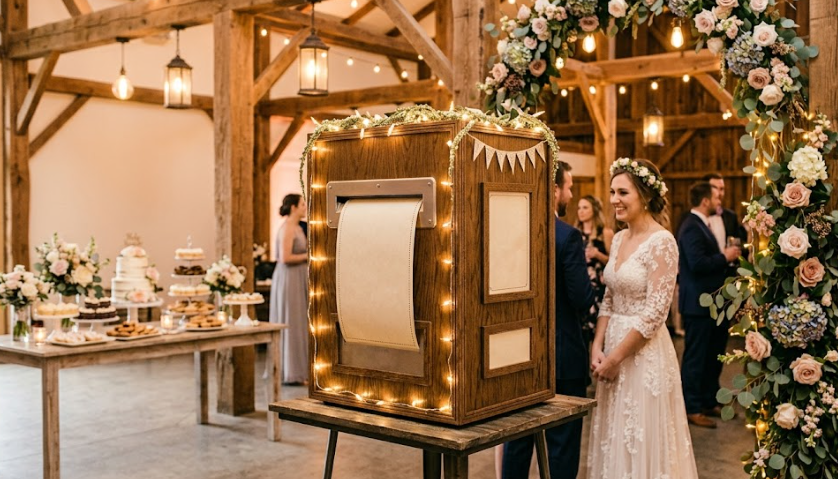
What is the best wooden photo booth? The category covers three styles: vintage-inspired enclosed booths with wooden cabinetry, open air booths framed in reclaimed wood and rustic styling, and DIY wooden builds crafted for a single celebration. Professional wooden booth rentals run 700 to 1,800 dollars for three to four hours, while a handy host can build a charming DIY version for 150 to 500 dollars in materials.
Wood does something to a photo booth that plastic and aluminum never will: it makes the booth feel like it belongs at the party instead of being wheeled into it. At barn weddings, winery receptions, and farmhouse celebrations, a wooden booth reads as decor first and technology second. Let’s break down the styles, what they cost to rent or build, and how to get modern photo quality out of a setup that looks like it was always there.
The Three Styles of Wooden Photo Booth
“Wooden photo booth” means different things to different hosts, and the three interpretations serve different events.
The vintage-style enclosed booth. This is the nostalgic centerpiece: a wooden cabinet booth echoing the classic dime-store machines of the mid-century, with a bench, a curtain, and that unmistakable step-inside intimacy. Modern versions pair the wooden shell with current cameras and printers, delivering the retro strip aesthetic without the chemical-processing maintenance of true antiques. The format has surged alongside the broader nostalgia wave, a trend the best vintage photo booth guide traces in depth, and at weddings it doubles as the most photographed furniture in the room. For couples drawn to the enclosed experience generally, the best enclosed photo booth rental breakdown covers what the privacy-and-curtain format does that open setups cannot.
The rustic open air frame. Here the wood is the styling rather than the structure: a reclaimed-wood backdrop wall, a timber arch framing the posing area, wooden crates and ladders staging the props, and a kiosk dressed in cedar or barnwood paneling. This style keeps the open format’s group capacity and professional lighting while matching farmhouse, boho, and winery aesthetics seamlessly.
The DIY build. For crafty hosts, a weekend and a lumber run produce a one-event wooden booth: a freestanding frame, a styled backdrop, and a tablet or camera mount. It is the most affordable path to the aesthetic and a genuinely popular wedding project, with real limits covered below.
The right choice tracks the event’s formality and the photos’ destination: enclosed vintage for nostalgic charm and strip prints, rustic open air for group photos and professional quality, DIY for intimate gatherings where the building is part of the fun.
Rental Costs Across the Wooden Category
Here is how the wooden styles price as professional rentals, against the standard formats they compete with.
| Booth Style | Typical Rental (3-4 hrs) | Capacity | Signature Output |
| Vintage Wooden Enclosed | $900 – $1,800 | 2-4 guests | Classic photo strips |
| Rustic Open Air | $700 – $1,400 | 6-10 guests | Prints and digital, group-friendly |
| Wood-Styled Kiosk | $600 – $1,100 | 2-4 guests | Digital-first, GIFs, prints optional |
| Standard Open Air (comparison) | $700 – $1,400 | 6-10 guests | Prints and digital |
| Glam Booth (comparison) | $1,200 – $2,500 | 2-6 guests | Editorial portraits |
The vintage enclosed tier prices highest within the wooden category for honest reasons: the cabinets are heavy, hand-built, expensive to transport, and exist in limited supply in most markets. They also book earliest, since one vendor typically owns one or two cabinets, not a fleet, making 10 to 14 weeks of lead time the realistic window for peak wedding Saturdays.
Worth noting for rustic-wedding planners: the wooden aesthetic and modern formats are not either-or. Plenty of barn weddings run a wood-framed print station for keepsakes alongside a 360 photo booth on the dance floor for motion content, and bundled photo booth sets package exactly these pairings below the cost of separate bookings. The wood carries the aesthetic; the tech carries the energy.

How to Build a Wooden Photo Booth Yourself
The DIY route is a beloved wedding project, and done right, it produces a booth guests assume was rented. Here is the build that works.
The frame. A freestanding structure roughly 7 feet tall and 5 to 6 feet wide, built from 2×4 lumber or cedar posts, with a wide, stable base or sandbag-weighted feet. Three sides or a simple flat wall both work, and a header beam across the top carries signage and lights. Total lumber and hardware: 80 to 200 dollars depending on wood choice, with reclaimed pallet wood dropping the cost further and adding the weathered character the aesthetic wants.
The backdrop. Inside the frame, mount the photo surface: shiplap planks, a pallet-wood mosaic, or a fabric panel against the wood. Keep it visually calm, since busy wood grain everywhere swallows faces, so many builders whitewash or grey-wash the backdrop boards while leaving the frame natural.
The light. This is where DIY booths live or die. Wood styling absorbs light, and barn venues run dim, so a single bright source is non-negotiable: an 18-inch-plus ring light or an LED panel on a stand, positioned at the camera, just above eye level. String lights on the frame are atmosphere, not illumination, and the builds that disappoint skipped this distinction.
The camera. A phone or tablet on a mount with a remote shutter or a free booth app covers casual events. A borrowed DSLR on a tripod with an intervalometer raises quality meaningfully. Either way, mount at eye level, centered on the backdrop, six to eight feet back.
The styling. Wooden crates stacked as prop tables, a ladder shelf, chalkboard signs with posing prompts, and greenery garland complete the look for 50 to 100 dollars, with craft stores carrying most of it, and seasonal prop kits filling the basket.
The honest DIY ceiling: no attendant, no instant prints, no troubleshooting, and a host who becomes tech support. Under 50 guests, the trade is usually worth it; past that, the rental earns its price in the host’s own freedom.
Styling Wooden Booths Into the Event
Whichever path you choose, a few styling moves make the wooden booth feel inevitable rather than installed.
Match the wood tones to the venue. Honey-toned cedar suits warm barns, weathered grey suits coastal and modern-farmhouse venues, and dark walnut suits winery and library moods. A booth fighting the venue’s wood reads as rented; one matching it reads as architecture.
Light it like decor. Warm-white string lights or cafe bulbs wrapped on the frame, lit candle lanterns staged beside it, and the booth becomes an evening focal point that photographs beautifully even when empty.
Theme the props to the wood. Rustic events reward rustic props: wooden-framed signs, sunflowers and dried florals, mason jar accents, and chalkboard speech bubbles. The cohesion shows in every print, and broader theming strategy, matching props, backdrop, and template to one concept, is covered well in the photo booth theme ideas guide.
Upgrade the output where it counts. A wooden frame around modern capture is the best of both worlds, and events wanting elevated portraits inside the rustic shell can run glam-grade capture behind the timber styling, with experiences like the vogue photo booth proving that editorial lighting and farmhouse framing coexist beautifully, the portraits gain dimension while the setup keeps its charm.

Renting, Building, or Buying: The Wooden Booth Math
The wooden category attracts both hosts and aspiring owners, so here is the full decision table.
| Path | Upfront Cost | Best For | The Catch |
| Rent professional | $700 – $1,800 per event | Weddings, formal events | Book early, limited vintage inventory |
| DIY build | $150 – $500 materials | Intimate gatherings, crafty hosts | No attendant, host runs it |
| Buy / build for business | $3,000 – $12,000+ | Rental entrepreneurs | Transport weight, storage, insurance |
The business row deserves expansion, since wooden booths are a genuinely differentiated niche for operators. A handcrafted vintage-style cabinet or a premium rustic setup stands out in a market flooded with identical kiosks, commands above-average rates at the barn-wedding segment, and books through venue partnerships naturally. The costs are equally real: wooden cabinets weigh hundreds of pounds, demand a trailer or van, and need climate-safe storage. Owners also need commercial liability insurance from day one, because venues require certificates, plus a standard business license in most jurisdictions, neither of which is exotic but both of which belong in the year-one budget.
For the host simply throwing one celebration, the math stays simple: rent for formal events where reliability matters, build for intimate ones where the project is part of the joy.
Things To Know
A few field realities will sharpen your wooden booth plans. First, weight is the hidden logistics issue, since wooden cabinets and timber frames are dramatically heavier than aluminum kiosks, making load-in paths, stairs, and elevator access an early conversation with both vendor and venue. Second, outdoor wooden setups need weather sense, because raw lumber swells in rain and string lights need outdoor-rated power, so barn overhangs and tent edges beat open lawn placements. Third, the best wooden photo booth experiences light the wood separately from the guests, with a warm wash on the frame and a proper key light on faces, the two-light recipe that makes rustic setups photograph rich instead of dim. Fourth, vintage enclosed cabinets fit two to four guests, so large bridal parties should plan a group-shot station alongside or accept the charm of cramming, which honestly produces some of the night’s best strips. Fifth, craft stores stock most DIY styling, with prop kits, chalkboards, and garlands all seasonal staples, though quality wooden props outlast paper ones across a full evening of handling. And sixth, if the wooden aesthetic is the draw but the build intimidates, ask vendors about wood-styled packages, since many will dress a standard setup in barnwood paneling and rustic staging for a modest styling fee, the shortcut between Pinterest and reality.

Choosing the Best Wooden Photo Booth for Your Celebration
The best wooden photo booth matches the wood to the occasion: a vintage enclosed cabinet when nostalgia is the gift, a rustic open air frame when group photos and barn aesthetics lead, and a weekend DIY build when the gathering is intimate and the making is part of the memory. Whichever you choose, light the faces properly, match the tones to the venue, and the booth will look like it grew there.
Mihi Entertainment brings rustic-styled setups, vintage charm, and every modern format behind the woodgrain, from glam capture to 360 motion, to weddings and celebrations across Colorado and nationwide. Pick your timber, string the lights, and give your guests a photo booth that feels carved for the occasion.
FAQs About Wooden Photo Booths
Is it cheaper to rent or buy a photobooth?
Renting is cheaper for anyone hosting fewer than four or five events per year, since professional booth setups cost 3,000 to 12,000 dollars before software, insurance, and transport, and wooden cabinets add weight and storage demands on top. A single wedding or party is served far better by a 700-to-1,800-dollar rental with an attendant included. Buying or building for keeps only pays off as a business, where a distinctive wooden booth can recoup its cost within ten to fifteen bookings.
How to make a wooden photobooth?
Build a freestanding frame roughly 7 feet tall and 5 to 6 feet wide from 2x4s or cedar posts, mount a calm wooden or fabric backdrop inside it, add one bright light source at camera position, and center a phone, tablet, or DSLR at eye level six to eight feet back. Weight the base for stability, wrap the frame in string lights for atmosphere, and stage props on wooden crates beside it. Materials run 150 to 500 dollars, and the build suits gatherings under about 50 guests.
Does Hobby Lobby have photo booth props?
Yes, Hobby Lobby carries photo booth props year-round, including prop kits, paper props on sticks, chalkboard signs, and seasonal decor that doubles as booth styling. For wooden and rustic builds specifically, craft stores are a one-stop source: wooden frames, garlands, mason jar accents, and farmhouse signage all fit the aesthetic. Professional rentals typically include props, so check what your vendor provides before buying duplicates, and invest in a few quality wooden pieces over many paper ones.
Is owning a photo booth profitable?
Yes, photo booth businesses can be profitable, with operators charging 700 to 1,800 dollars per event against modest per-event costs once equipment is paid off, and distinctive wooden booths commanding premium rates in the wedding market. Profitability depends on booking volume and niche, since a handcrafted vintage cabinet stands out where generic kiosks compete on price. Owners should budget for transport, storage, insurance, and marketing, and treat steady weekend bookings as the real business model rather than the hardware.
Do you need a license for a photo booth?
Most jurisdictions require a standard business license to operate a photo booth company, plus general liability insurance, typically one million dollars in coverage, which most venues demand before allowing setup. No special photography license exists for booths in most areas, but operators playing music may need to address licensing for public performance, and those hiring staff take on normal employer obligations. For hosts renting, none of this applies directly; simply confirm your vendor is licensed and insured and can furnish your venue’s certificate.