 Skip to content
Key Takeaways
- Best places for corporate events depend entirely on your guest count, event goal, and budget, there’s no single “best” venue type.
- Hotels and conference centers work well for large formal gatherings; breweries, museums, and unique spaces suit smaller, culture-focused events.
- Free venues exist but almost always trade cost savings for restrictions on catering, alcohol, or setup time.
- The most common venue mistake is booking based on how a space looks in photos rather than how it functions for your specific guest count.
- Unique venues (art galleries, rooftop spaces, sports facilities) generate more guest engagement than a generic ballroom, but usually cost more or require more logistics planning.
Best places for corporate events isn’t a single answer, it’s a decision that depends on your guest count, budget, and what you’re actually trying to accomplish. A 25-person client dinner and a 400-person product launch need fundamentally different venue types, even though both fall under the same search term.
What Does “Best Places for Corporate Events” Actually Mean?
This keyword carries commercial investigation intent. The person searching it has usually already committed to hosting an event and is now comparing venue categories, hotels versus unique spaces versus free options, before requesting quotes or touring locations.
Related terms worth understanding alongside this one include corporate event venues, unique event spaces, conference venue rental, corporate venue rental cost, event space near me, and private event venues. These show up throughout venue marketplace sites and event planning guides because they represent the actual categories planners search through before booking.
The mistake most people make with this search is assuming there’s one universal “best” answer. A hotel ballroom is the best choice for a 300-person all-hands meeting and a poor choice for a 20-person team celebration that wants a more personal, memorable feel.
Why Venue Choice Matters More Than People Expect
A wrong venue choice doesn’t usually announce itself as a failure. The event still happens, catering gets served, people mingle, but the space quietly works against the event’s actual goal the entire time. A stiff, oversized ballroom for a 30-person intimate dinner feels hollow. A cramped rooftop bar for a 200-person formal event creates bottlenecks and frustration.
Venue selection has also gotten more competitive over the past few years as unique, non-traditional spaces, breweries, art studios, rooftop venues, have entered the corporate event market alongside traditional hotels and conference centers. That’s good news for planners, but it also means more research is needed to separate a genuinely good fit from a venue that just photographs well on Instagram.
Traditional Venues That Still Work Well
Traditional venue types remain reliable for a reason: they’re built specifically for the logistics corporate events require.
Hotels and Conference Centers
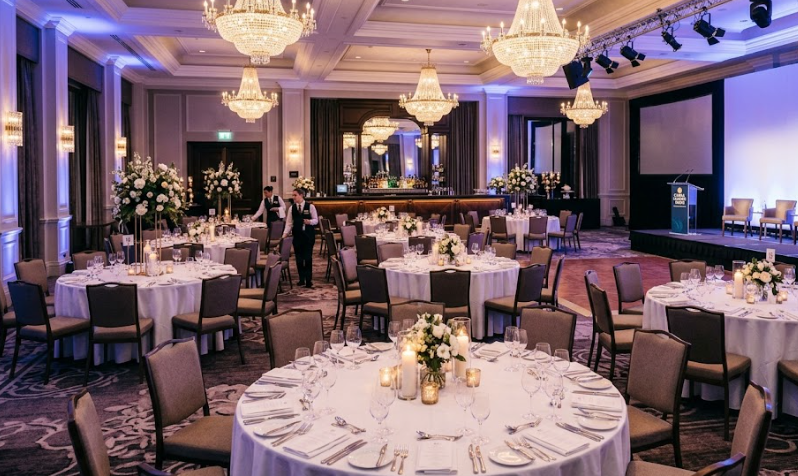
Hotels remain the default choice for large-scale, formal corporate events, and for good reason. Built-in AV equipment, on-site catering, and dedicated event coordinators remove a huge amount of logistical risk compared to a raw space.
- Best for: Conferences, all-hands meetings, large formal dinners over 150 guests.
- Typical cost: $50-$150+ per person depending on market and catering package.
- Watch for: Generic, “corporate default” aesthetic that can feel impersonal without strong decor or entertainment to offset it.
Country Clubs and Golf Venues
Country clubs offer a polished, upscale setting that works particularly well for client appreciation events and executive dinners where impressing guests matters as much as feeding them.
- Best for: Client dinners, executive retreats, milestone celebrations.
- Typical cost: $75-$200+ per person, often with membership sponsorship required.
- Watch for: Membership access restrictions; not every club allows outside corporate bookings without a member sponsor.
Restaurants With Private Dining Rooms
For smaller client dinners or team celebrations, a private dining room at a well-regarded restaurant offers a warmer, more personal atmosphere than a hotel ballroom.
- Best for: Groups under 40, client relationship dinners, small team celebrations.
- Typical cost: $60-$120 per person including a set menu.
- Watch for: Limited AV capability; most restaurant private rooms aren’t built for presentations or speeches.
Unique Venues That Generate More Buzz
Unique venues have grown significantly as a corporate event category because they photograph better, feel more memorable, and give guests something to actually talk about afterward.
Art Galleries and Museums
An art gallery or museum space adds a level of sophistication and visual interest that a generic ballroom simply can’t replicate, and it doubles as a built-in conversation starter for networking-focused events.
- Best for: Client appreciation events, product launches, brand-forward gatherings under 200 guests.
- Typical cost: $5,000-$20,000+ venue rental fee, plus separate catering costs.
- Watch for: Strict rules around food and drink near exhibits; some spaces require additional insurance riders.
Breweries and Distilleries
Breweries have become a popular mid-budget option for team celebrations and casual client events, offering built-in atmosphere without the formality (or cost) of a traditional banquet hall.
- Best for: Team celebrations, casual client mixers, holiday parties under 150 guests.
- Typical cost: $1,500-$5,000 venue fee, often with reduced or waived rental if beverage minimums are met.
- Watch for: Limited private space at some locations; confirm exclusivity before booking if privacy matters.
Rooftop and Outdoor Spaces
A rooftop venue delivers a strong visual impact for photos and social sharing, particularly for summer events and product launches aiming for a high-energy, modern feel.
- Best for: Product launches, summer client events, younger company culture celebrations.
- Typical cost: $3,000-$10,000+ depending on city and season.
- Watch for: Weather contingency planning is mandatory; always confirm an indoor backup option in the contract.
Sports and Entertainment Venues
Stadiums, arenas, and entertainment complexes increasingly offer private event spaces for corporate bookings, giving guests a genuinely novel setting outside the usual hotel-or-restaurant rotation.
- Best for: Large-scale product launches, client entertainment events, milestone company celebrations.
- Typical cost: $10,000-$40,000+ depending on venue and exclusivity level.
- Watch for: Minimum guest counts are often high; these venues rarely make financial sense for groups under 100.

Matching the Venue to Your Entertainment and Activation Plan
Venue choice and entertainment format aren’t separate decisions, they constrain each other in ways first-time planners often miss. A venue with limited power access rules out certain interactive booths; a formal seated venue doesn’t suit high-energy activations the way an open reception space does.
- For a client appreciation event at a country club or private dining room, a roaming photo booth rental supports conversation without pulling guests away from their tables.
- For a product launch at a gallery or rooftop venue, a custom branded photo booth turns the space into shareable marketing content.
- For a team celebration at a brewery or casual venue, a green screen photo booth rental adds a playful, low-pressure activity that fits the relaxed tone.
- For a hybrid event with remote attendees, a virtual photo booth lets off-site staff or clients participate no matter which physical venue you choose.
Confirming these logistics with the venue, power outlets, floor space, load-in access, before signing a contract avoids a scramble two weeks before the event.
Free and Low-Cost Venue Options
Free venues exist, but they almost always come with tradeoffs worth understanding upfront.
- Company offices or unused conference space. Zero rental cost, but limited capacity and no built-in ambiance.
- Public parks and community spaces. Often free or low-cost for permits, but require bringing in all catering, seating, and power infrastructure yourself.
- Partner or client office space. Some companies successfully negotiate free space through a partner relationship in exchange for co-branding or reciprocal event access.
- Library or community center event rooms. Frequently free or under $200 for nonprofit or community-adjacent corporate events, though availability and AV capability vary widely.
The realistic tradeoff with free venues is almost always logistics. You’re saving on rental cost but taking on catering coordination, seating, decor, and AV setup that a paid venue would otherwise include.

Common Mistakes and Misconceptions
A handful of venue-selection errors show up repeatedly across corporate events of every budget.
- Booking based on photos instead of function. A stunning venue that can’t fit your guest count comfortably or lacks power for your AV needs creates more problems than it solves.
- Ignoring load-in and setup logistics. Unique venues especially, galleries, rooftops, historic buildings, often have narrow doorways, elevator restrictions, or limited setup windows that catch planners off guard.
- Skipping the weather contingency conversation. Outdoor and rooftop venues need a confirmed indoor backup in writing, not a verbal assurance.
- Assuming “unique” always means “better.” A quirky venue that doesn’t match your event’s actual tone or goal can feel gimmicky rather than memorable.
- Not confirming exclusivity. Some venues, especially breweries and restaurants, book multiple events simultaneously unless you pay for full exclusivity, which can mean unexpected crowd overlap.
Reviewing general photo booth mistakes to avoid is also worth doing once a venue is locked in, since setup constraints at unique venues specifically tend to affect entertainment logistics more than at a standard hotel ballroom.
Step-by-Step: How to Choose the Right Venue for Your Event
- Define your guest count and event goal first. This single decision eliminates most unsuitable venue categories immediately.
- Set a realistic venue budget as part of your total event budget, typically 40-50% of total spend including catering.
- Shortlist 3-4 venues across different categories (one traditional, one unique) rather than comparing only similar spaces.
- Tour each venue in person, checking power access, load-in routes, and actual capacity, not just the listed maximum.
- Confirm weather and AV contingencies in writing for any outdoor or non-traditional space.
- Book 90+ days out for mid-size events, and 4-6 months out during peak seasons like November-December.
- Match your entertainment and activation plan to the venue’s actual layout, reviewing options like event entertainment ideas once the space is confirmed rather than before.

Finding the Right Space for Your Event
The best venue for a corporate event isn’t the flashiest one, it’s the one that actually fits your guest count, budget, and the goal you’re trying to accomplish. A hotel ballroom, a brewery, an art gallery, and a rooftop space can all be the “best” choice depending entirely on what your specific event needs to deliver.
If you’ve locked in a venue and want entertainment that fits the space and your event goal, explore Mihi’s full range of photo booth sets or browse corporate photo booth activation options to see what works best for your venue layout.
FAQs About Best Places for Corporate Events
What are good corporate events?
Good corporate events are built around a clear goal, client relationship building, brand visibility, or team morale, with a venue and format chosen specifically to support that goal rather than picked for appearance alone. The strongest events pair the right venue type (hotel, unique space, or restaurant) with entertainment and catering that matches the room’s actual tone. An event with a defined purpose and matching venue consistently outperforms one built from a generic checklist.
How do you get a free venue for an event?
Free venues typically come through company office space, public parks with waived or low-cost permits, or partner relationships where a client or vendor offers space in exchange for co-branding or reciprocal access. Community centers and libraries sometimes offer free or heavily discounted rooms for smaller corporate or nonprofit-adjacent events. The tradeoff is almost always logistics: free venues rarely include catering, seating, or AV equipment, so those costs shift elsewhere in your budget.
What are some unique venue ideas?
Strong unique venue options include art galleries and museums, breweries and distilleries, rooftop or outdoor spaces, and private event areas within stadiums or entertainment complexes. Each offers a distinct atmosphere that a traditional ballroom can’t replicate, but they typically require more logistics planning around power access, load-in restrictions, and weather contingencies. Matching the venue’s personality to your event’s actual goal matters more than choosing the most photogenic option available.
What are the 7 types of events?
Events are commonly grouped into seven broad categories: corporate events, social or celebratory events (weddings, birthdays), fundraising and charity events, educational events (conferences, seminars), sporting events, cultural or religious events, and promotional or brand activation events. Corporate events themselves span several of these categories internally, spanning internal culture events, client-facing dinners, and product-marketing activations. Knowing which category your event falls into helps narrow down which venue types will actually fit.
What are all the 5-star events?
“5-star events” typically refers to high-end corporate gatherings held at luxury hotels, five-star resorts, or premium private venues, characterized by upscale catering, dedicated event staff, and premium décor and entertainment. These events usually apply to executive retreats, major client appreciation dinners, or flagship product launches where budget isn’t the primary constraint. The venue categories overlap heavily with traditional five-star hotels and country clubs, though some luxury unique venues (private galleries, exclusive rooftop spaces) also fall into this tier depending on service level and exclusivity.