 Skip to content
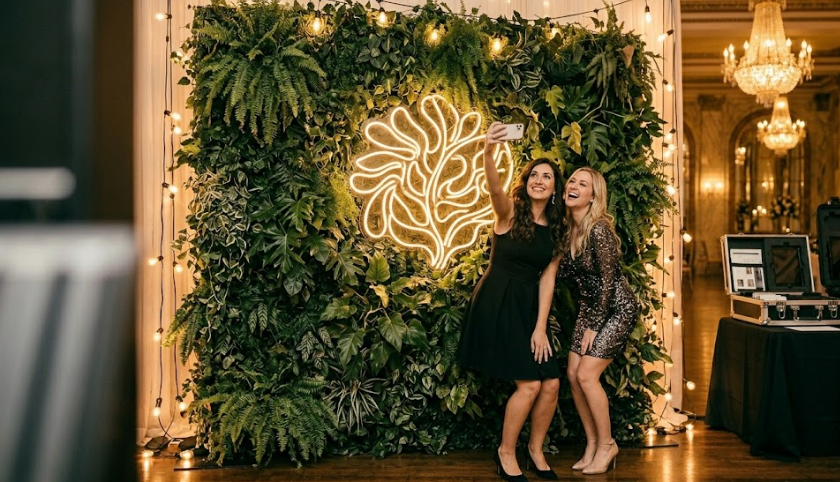
Looking for selfie photo booth ideas? The best ones combine a styled backdrop, flattering light at face height, a phone stand or mounted tablet, and a clear prompt that tells guests what to do, with themes ranging from flower walls and neon signs to seasonal sets and branded step-and-repeats. A DIY selfie station costs 100 to 400 dollars to build, while professionally styled selfie setups rent for 400 to 900 dollars, making this the most accessible booth category for any event.
The selfie station’s genius is that it works with hardware every guest already carries. You are not renting a camera so much as building a stage for two hundred cameras that walk in the door. Let’s run through the ideas that actually get used, the lighting and layout rules that separate charming stations from skipped ones, and the upgrade paths when your event outgrows DIY.
Selfie Station vs. Photo Booth: Know What You’re Building
The terms blur together, but the distinction shapes every decision that follows.
A selfie station is a styled environment, backdrop, lighting, props, signage, where guests shoot on their own phones or a mounted tablet. No attendant, no printer, minimal equipment. Its strengths are cost, footprint, and zero lines, since multiple groups can rotate through fast. Its limits are image quality, which depends on each guest’s phone and angle, and the absence of keepsakes, since nothing prints.
A photo booth adds dedicated capture: a real camera, controlled lighting, an attendant, prints, and instant digital delivery. Quality jumps, keepsakes exist, and someone manages the experience, at a correspondingly higher price.
The honest planning rule: selfie stations excel as secondary photo moments and at casual gatherings under about 75 guests, while events where the photos are the point, weddings, milestones, corporate functions, justify the booth tier. Plenty of larger events run both: the rented booth as the centerpiece, a selfie corner as the overflow. Browsing what full-service operators offer at each tier, mapped well in the best photo booth rental near me guide, makes the tradeoffs concrete fast.
Fifteen Selfie Station Ideas That Get Used
The graveyard of party planning is full of selfie corners nobody touched. The ones that work share a trait: they make the photo idea obvious at a glance. Here are the concepts with the highest participation rates, grouped by event energy.
For weddings and elegant parties: a flower wall in the event palette, an oversized gilded frame guests pose inside, a champagne wall doubling as the backdrop, a vintage sofa vignette styled like an editorial set, or a neon sign with the couple’s name or a short phrase that doubles as the photo’s caption.
For birthdays and casual celebrations: a balloon garland arch in bold colors, a metallic fringe curtain that moves with guests, a giant number or letter matching the milestone, a “mugshot” sign board with the party date, or an inflatable installation guests interact with.
For corporate and brand events: a branded step-and-repeat done well, meaning generous logo spacing and premium material, a product-integrated set where the item belongs in the shot naturally, or an industry in-joke backdrop that gives colleagues a reason to tag each other.
For seasonal events: a pumpkin-and-crate harvest vignette, a twinkle-light curtain dense enough to read as a wall of glow, or a beach-and-pampas summer set.
Whatever the concept, three production details decide participation. A prompt sign (“Strike a pose, tag #SmithWedding”) converts walkers into posers, since unprompted guests assume the pretty corner is decor. A phone stand or shelf at chest height lets solo guests and full groups shoot hands-free. And deliberate spacing, with the posing spot marked a few feet off the backdrop, keeps shadows off the wall and depth in the frame. Deeper theming strategy, matching backdrop, props, and signage to one coherent concept, is covered thoroughly in the photo booth theme ideas guide.

Lighting: The Difference Between Charming and Skipped
Here is the uncomfortable truth about selfie photo booth ideas: the backdrop gets the Pinterest saves, but the lighting determines whether anyone actually likes their photo, and people only keep posing at stations that make them look good.
Put light at face height, beside or behind the camera position. A ring light on a stand, 18 inches or larger, aimed at the posing spot is the single highest-value purchase in the entire DIY category, typically 60 to 150 dollars. Overhead venue lighting alone carves shadows under eyes and reads as harsh in every phone shot.
Fight the windows, don’t ignore them. Daytime stations should face guests toward natural light, with the window behind the phone position, never behind the posers, where it silhouettes everyone.
Make glow part of the design. Twinkle-light curtains, neon signs, and marquee letters illuminate and decorate simultaneously, which is why they dominate the most-used stations. Dense beats sparse: a full curtain of micro-lights reads as magic, a single string reads as clutter.
Match the light’s warmth to the room. Bi-color LED sources let you tune warm for candlelit evening venues and neutral for daylight events, keeping skin tones true instead of orange.
The full playbook, positioning, diffusion, color temperature, and the cheap fixes for dim venues, lives in the photo booth lighting tips guide, and it applies identically whether the camera is a phone on a stand or a rented rig.
When and How to Upgrade Past the Selfie Tier
Selfie stations have a ceiling, and recognizing it early saves events from discovering it mid-party.
The quality ceiling: phone shots under party lighting plateau at “fine,” and events where guests dress up deserve better. The glam tier exists for exactly this jump, and a vogue photo booth brings studio strobes and editorial skin-smoothing that no phone-and-ring-light corner approaches, the difference between photos guests post and portraits they frame.
The energy ceiling: static selfies capture poses, not moments. Motion formats capture the party itself, and a slow motion booth turning confetti tosses into cinematic clips delivers the content guests share hardest, the upgrade that makes sense the moment the event has a dance floor.
The interaction ceiling: selfie stations are solo experiences in parallel, while interactive formats are shared ones. A graffiti wall photo booth where guests doodle and spray over their own photos turns the photo moment into a group activity, and the crowd it gathers entertains the room in a way no backdrop corner can.
The practical pattern at mid-size and larger events: keep a styled selfie corner as the always-open overflow, and put the rental budget into one professional centerpiece. The corner costs little, the centerpiece carries the night, and together they cover every guest’s appetite.

Budgeting Selfie Stations and Their Upgrades
Here is how the selfie tier and its upgrade paths price out across common events.
| Setup | Typical Cost | What’s Included | Best For |
| DIY Selfie Corner | $100 – $400 | Backdrop, ring light, phone stand, props, sign | Home parties, showers |
| Premium DIY | $300 – $700 | Flower wall or neon sign, quality lighting, styled vignette | Weddings on a budget, milestone parties |
| Rented Selfie Station | $400 – $900 | Professional backdrop, tablet kiosk, digital delivery | Corporate mixers, mid-size events |
| Professional Booth | $700 – $1,500 | DSLR, attendant, prints, instant delivery | Weddings, formal events |
| Premium Format | $900 – $2,500 | Glam, motion, or interactive experience | Galas, large celebrations |
And here is how the DIY budget itself best divides, since most home builders overspend on the backdrop and underspend everywhere else.
| DIY Line Item | Share of Budget | The Smart Buy |
| Lighting | 35-40% | 18-inch+ bi-color ring light on a stand |
| Backdrop | 30-35% | One committed concept, generously sized |
| Phone stand / mount | 10% | Adjustable tripod with remote shutter |
| Props and signage | 15-20% | Six quality props, one clear prompt sign |
That lighting-first allocation is the entire secret of DIY stations that get used all night.
Things To Know
A few field realities will make any selfie station earn its corner. First, placement beats beauty, since the most gorgeous backdrop in a dead hallway loses to a modest one beside the bar, because selfie participation is impulse-driven and impulse follows foot traffic. Second, the prompt sign is non-negotiable, as stations without explicit instructions get treated as decor, and a sign with the hashtag, a pose suggestion, and “yes, this is for photos” energy doubles usage. Third, the phone shelf is the unsung hero, because groups cannot all be in a handheld selfie, and a chest-height stand with a remote shutter or timer turns couples’ shots into full-squad photos. Fourth, plan for the backdrop’s wind and wear, since fringe curtains tangle, balloon garlands sag in heat, and outdoor stations need weights and staking, maintenance someone should own during the event. Fifth, collect the photos somehow, with a shared album QR code or hashtag on the prompt sign, because the host otherwise never sees the hundreds of photos the station produced. And sixth, the best selfie photo booth ideas scale with honesty, meaning a DIY corner is perfect until roughly 75 guests, and past that line the missing attendant, prints, and quality ceiling start showing, which is exactly when professional rental budgets begin paying for themselves.

Bringing Your Selfie Photo Booth Ideas to Life
The best selfie photo booth ideas share a formula: a backdrop with one committed concept, light at face height, a stand that frees every hand, and a sign that tells guests exactly what to do, placed where the party already flows. Build that for a casual crowd, and upgrade to professional capture when the dress code and guest count rise, because the station that flatters its guests is the one that stays busy all night.
Mihi Entertainment covers the whole spectrum, styled selfie setups, glam studio portraits, motion booths, and interactive walls, at events across Colorado and nationwide. Start with the corner, dream toward the centerpiece, and either way, give your guests a reason to stop, pose, and post.
FAQs About Selfie Photo Booths
What is the difference between a selfie station and a photo booth?
A selfie station is a styled backdrop with lighting where guests shoot on their own phones, while a photo booth adds dedicated cameras, professional lighting, an attendant, prints, and instant delivery. The station wins on cost, footprint, and zero lines; the booth wins on image quality, keepsakes, and a managed experience. Casual events under about 75 guests are well served by a station, while weddings and formal events justify the booth, and many larger events run both together.
How to make a selfie photo booth?
Build a selfie booth with four components: a styled backdrop like a balloon garland or light curtain, an 18-inch or larger ring light at face height, a phone stand at chest height with a remote shutter or timer, and a prompt sign with the event hashtag. Mark the posing spot a few feet off the backdrop, add six quality props, and place the whole setup in natural foot traffic. Total cost runs 100 to 400 dollars, and the lighting deserves the biggest share of the budget.
How much do you pay for a photo booth?
Professional photo booth rentals cost 700 to 1,500 dollars for three to four hours, with premium formats like glam, 360, and interactive booths running 900 to 2,500 dollars, while rented selfie stations price at 400 to 900 dollars. Quality packages include an attendant, real lighting, unlimited output, and instant digital delivery. DIY selfie corners cost 100 to 400 dollars in materials and suit casual gatherings, with the rental tiers earning their price as guest counts and formality rise.
How to start a selfie photo booth business?
Start with a halo-style kiosk or quality tablet setup at 1,500 to 4,000 dollars, register a business and buy liability insurance, build a simple booking website with a portfolio, and price packages at 400 to 900 dollars for selfie-tier events. Early bookings come from friends’ events, venue partnerships, and local social media, with reviews becoming the real marketing engine. Profitable operators reinvest toward DSLR and premium formats, where rental rates double, and treat weekend booking volume as the actual business model.
Do photo booths make good money?
Yes, photo booth businesses reliably make good money for committed operators, with selfie-tier setups earning 400 to 900 dollars per event and professional formats earning 700 to 3,000 dollars against modest per-event costs. Equipment typically pays for itself within ten to twenty bookings, and the recurring costs, insurance, software, transport, stay low relative to event rates. Income tracks booking volume above all, which makes marketing, reviews, and venue relationships the difference between a side hustle and a real business.