 Skip to content
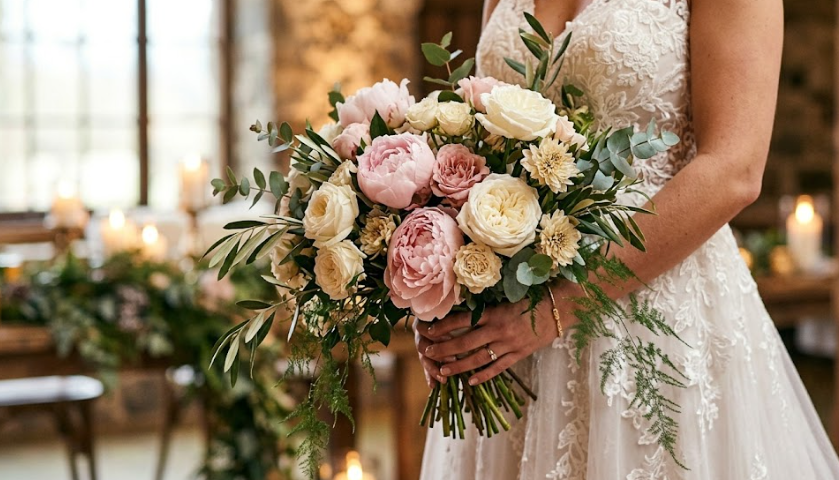
What flowers are popular for weddings? Roses top the list year after year, followed closely by peonies, hydrangeas, ranunculus, eucalyptus greenery, and anemones. These blooms dominate because they photograph beautifully, hold up through a long wedding day, and work across nearly every style, from classic ballroom to boho garden.
But popularity is only half the story. The right flowers for your wedding depend on your season, your color palette, your budget, and how much fragility you are willing to babysit on a hot afternoon. Let’s break down the most loved wedding flowers, what they cost, when they shine, and how to build a floral plan that looks expensive without quietly becoming your biggest line item.
Why Certain Flowers Dominate Weddings
Florists do not reach for the same dozen blooms out of habit. The most popular wedding flowers earn their spot by passing three practical tests.
They survive the day. A wedding flower lives a hard life. It is cut, transported, arranged, photographed in the sun, and expected to look fresh ten hours later at the last dance. Roses, hydrangeas, and ranunculus are workhorses that hold their shape without water for hours. Delicate blooms like sweet peas and gardenias are gorgeous but wilt fast, which is why they appear as accents rather than foundations.
They photograph well. Full, layered petals read beautifully on camera. Peonies and garden roses create that lush, romantic texture couples see all over wedding inspiration boards, and photographers love them because they add depth to every frame.
They scale affordably. A wedding needs the same flower repeated dozens or hundreds of times across bouquets, centerpieces, and installations. Blooms with reliable year-round supply chains, like standard roses and chrysanthemums, keep large orders affordable. Rare or hyper-seasonal flowers can triple a budget the moment they become the star instead of the accent.
The flowers that pass all three tests become the industry’s go-to palette, and that is exactly what the popularity rankings reflect.
The Most Popular Wedding Flowers and What They Cost
Here is how the most requested wedding blooms compare on price, season, and best use. Stem prices reflect typical retail florist ranges and vary by region and year.
| Flower | Typical Cost Per Stem | Peak Season | Best Used For |
| Rose (standard) | $2 – $5 | Year-round | Bouquets, centerpieces, large installations |
| Garden Rose | $5 – $9 | Spring through fall | Romantic bouquets, statement centerpieces |
| Peony | $7 – $15 | Late April to June | Bridal bouquets, luxe focal blooms |
| Hydrangea | $4 – $8 | Summer through fall | Filling volume fast in centerpieces |
| Ranunculus | $3 – $7 | Winter to spring | Texture in bouquets, boutonnieres |
| Anemone | $3 – $6 | Winter to spring | Modern palettes, dramatic contrast |
| Tulip | $2 – $4 | Winter to spring | Minimalist and spring designs |
| Dahlia | $4 – $8 | Late summer to fall | Bold fall bouquets and centerpieces |
| Eucalyptus | $2 – $4 per bunch stem | Year-round | Greenery base, garlands, loose runners |
| Baby’s Breath | $1.50 – $3 | Year-round | Airy installations, budget volume |
A few patterns jump out of that table. Roses stay popular partly because they are the rare premium-looking flower with stable year-round pricing. Peonies, the most requested bloom in bridal bouquets, carry the steepest price and the narrowest natural window, which is why May and June brides get them affordably while October brides pay imported-stem prices. And humble baby’s breath has staged a full comeback, moving from filler to headliner in cloud-style installations that deliver enormous visual impact per dollar.

Matching Flowers to Your Season
The single smartest floral decision you can make is choosing blooms that peak naturally around your date. In-season flowers cost less, look better, and arrive fresher because they travel shorter distances.
Spring weddings own the most coveted lineup: peonies, ranunculus, tulips, anemones, and lilac. If your heart is set on a peony-forward bouquet, a late-spring date is the financially sensible way to get it.
Summer weddings lean on roses, hydrangeas, sunflowers, dahlias arriving late in the season, and abundant greenery. Heat tolerance matters most here, so summer florists favor sturdy blooms and design with water sources hidden inside arrangements.
Fall weddings belong to dahlias, chrysanthemums, marigolds, and roses in burgundy, terracotta, and amber tones. Texture rules the season, with dried elements like pampas grass and bunny tails mixing into fresh arrangements.
Winter weddings work with anemones, ranunculus, amaryllis, evergreens, and plenty of candlelight. Smart winter couples lean into the season rather than fighting it, pairing deep red and white palettes with metallics and letting greenery and candles carry volume affordably.
What flowers are popular for weddings shifts noticeably by season, and the couples happiest with their florals are almost always the ones who let the calendar lead the design instead of forcing an out-of-season vision into the budget.
Building a Floral Plan That Fits Your Budget
Flowers typically claim 8 to 10 percent of a total wedding budget, which means a 40,000 dollar wedding carries a floral budget around 3,200 to 4,000 dollars. Here is how that money typically gets distributed, and where you can stretch it.
| Floral Element | Share of Floral Budget | Money-Saving Strategy |
| Bridal and party bouquets | 15-20% | Keep bridesmaid bouquets small and simple |
| Ceremony arrangements | 20-25% | Design pieces that move to the reception after vows |
| Reception centerpieces | 35-45% | Vary heights, use candles and greenery for half the tables |
| Boutonnieres and corsages | 5% | Single-bloom designs cost a fraction of clusters |
| Installations and extras | 10-20% | One statement piece beats five small ones |
Two strategies in that table deserve emphasis. Repurposing ceremony flowers is the highest-value move in wedding floristry, since the arch arrangement that frames your vows can flank your sweetheart table an hour later, effectively making one purchase work two shifts. And concentrating budget into a single showstopper, like one dramatic installation over the dance floor, photographs far better than spreading the same dollars across a dozen forgettable bud vases.
It also helps to think about where flowers and photography intersect. Guests gravitate to the most beautiful corner of any reception, and couples increasingly design a floral moment specifically as a backdrop for photos. Pairing a lush floral wall or installation with an experience like the vogue photo booth turns your biggest floral investment into the most photographed spot of the night, multiplying its value in every guest’s camera roll. Couples exploring ideas in the AI photo booth smart features guide will notice how often florals frame the shots guests actually share.

Popular Flowers by Wedding Style
Style narrows your flower list faster than almost any other filter, so identify your aesthetic before your first florist meeting.
Classic and elegant weddings build on roses, peonies, hydrangeas, and calla lilies in white, ivory, and blush. This is the timeless ballroom palette, and it pairs naturally with historic venues, the kind of architecturally rich spaces showcased in the Wrigley Mansion Phoenix guide, where restrained florals let the setting speak.
Boho and garden styles favor loose, asymmetrical arrangements of garden roses, ranunculus, wildflower textures, and trailing greenery. Dried elements and pampas grass keep showing up here, and the unstructured look has the side benefit of being more forgiving on budget.
Modern and minimalist couples choose sculptural blooms: anthuriums, orchids, calla lilies, and single-variety arrangements in monochrome palettes. Fewer stems, placed deliberately, often cost less than abundance styles while making a stronger statement.
Romantic and whimsical weddings layer peonies, sweet peas, lisianthus, and anemones in soft gradients. This is the most flower-dense style and typically the most expensive per table, so romantic-style couples benefit most from the candle-and-greenery alternating trick.
Whichever direction you lean, remember that florals set the visual tone guests notice first, while entertainment sets the energy they remember last. A reception that pairs gorgeous tablescapes with interactive moments, whether that is a roaming Rosie the Robot photo booth charming guests between courses or keepsakes from a sketchbot booth drawing personalized portraits, covers both halves of the guest experience. The best sketchbot draw me photo booth guide shows how artistic keepsakes have become the floral bouquet’s modern counterpart: something beautiful guests take home.
Things To Know
A handful of floral realities will save you money and disappointment. First, Pinterest inflation is real, because many viral bouquet photos feature out-of-season imported blooms styled for editorial shoots, so bring inspiration photos to your florist and ask what the same look costs with in-season substitutes. Second, white flowers cost more than colored ones in many varieties because imperfections show, and pure white peonies or garden roses command premium grading. Third, flower prices spike around Valentine’s Day and Mother’s Day, so weddings within two weeks of either holiday should expect 20 to 40 percent higher stem costs, especially on roses. Fourth, fragrance is a real consideration at dinner tables, since heavily scented blooms like stargazer lilies can overwhelm food aromas and trigger allergies, which is why florists keep them away from centerpieces. Fifth, silk and dried flowers have shed their stigma, and mixing high-quality faux stems into installations where no one looks closely can cut costs by a third without anyone noticing. And sixth, ask your florist about post-wedding donation services, because organizations in most cities repurpose wedding flowers for hospitals and care homes, giving your biggest aesthetic spend a meaningful second life.

What Flowers Are Popular for Weddings and Right for Yours?
So, what flowers are popular for weddings? Roses, peonies, hydrangeas, and ranunculus lead the rankings, with dahlias and anemones rising fast behind them. The better question is which of those popular blooms align with your season, your style, and the share of budget you are genuinely comfortable handing to the florist.
Get those three answers right and your flowers will look effortless. Then make sure the rest of the night matches. Mihi Entertainment brings interactive experiences to weddings across Colorado and nationwide, giving your beautifully designed celebration the energy, laughter, and take-home memories that petals alone cannot provide.
FAQs About Popular Wedding Flowers
What is the most common flower used in weddings?
The rose is the most common wedding flower in the world, appearing in the majority of bouquets and arrangements. Its dominance comes from year-round availability, dozens of color options, sturdy petals that survive long days, and a price range that scales from budget to luxury. Standard roses fill volume affordably, while garden roses deliver the lush, ruffled peony look in months when peonies are unavailable.
What is the 3:5:8 rule for weddings?
The 3:5:8 rule is a floral design principle that sizes arrangements in proportions of three, five, and eight to create natural visual balance. Rooted in the Fibonacci sequence found throughout nature, it guides florists to group blooms in odd numbers and scale containers so the arrangement stands roughly one and a half times the vessel height. Couples do not need to apply it themselves, but knowing the term helps you recognize a florist who designs with intention.
What is the number one flower for a wedding?
The peony is widely considered the number one most requested wedding flower, even though roses appear in more weddings overall. Brides ask for peonies by name more than any other bloom because of their enormous, romantic, ruffled heads that photograph like nothing else. Their catch is a short natural season from late April through June, which makes them affordable for late-spring weddings and a costly imported splurge the rest of the year.
What are the best flowers for weddings?
The best wedding flowers are roses, peonies, hydrangeas, ranunculus, anemones, and dahlias, chosen according to your season and style. “Best” really means the intersection of durability, beauty, and budget for your specific date. A September couple is best served by dahlias and roses, while a March couple gets more beauty per dollar from ranunculus, anemones, and tulips. Matching bloom to season beats chasing any universal list.
How much do flowers cost for a 100 person wedding?
Flowers for a 100 person wedding typically cost 2,500 to 6,000 dollars, with the national average landing around 3,500 to 4,500 dollars. That assumes roughly ten to twelve guest tables with centerpieces, a bridal bouquet, a wedding party, boutonnieres, and modest ceremony pieces. Elaborate installations, flower walls, or peony-heavy designs push totals well past 8,000 dollars, while greenery-forward designs with candles can land under 2,500.